Meta Is Making the Conversions API One Click. Read This Before You Switch.
Meta now offers to set up the Conversions API for you: one click, no cost, no maintenance. That is genuinely useful if you are running the Pixel alone. Here is what actually changed, how to check whether server events are arriving, and why an easier setup is not a proven outcome.


Meta says it's removing the technical barriers so smaller businesses can finally get decent conversion data. I think that's genuinely useful. But there's a second question sitting underneath it: is Meta just making measurement easier, or is it also making itself the default owner of more of the measurement layer?
I don't think there's enough evidence yet to answer that. Which is exactly why I'd test, watch and compare before replacing a setup that already works.
Pixel and Conversions API are not rivals
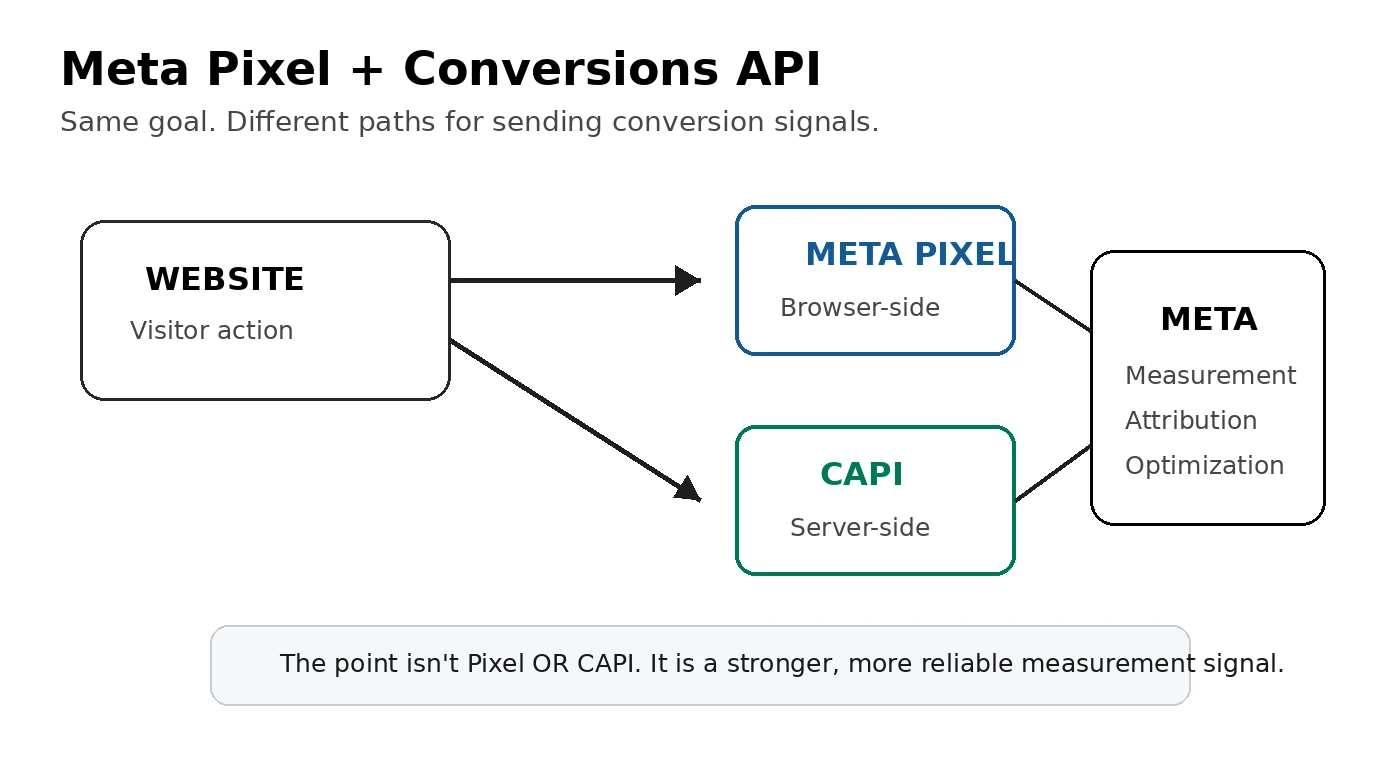
Marketers talk about these together, so it's worth pulling them apart.
The Pixel sends events from the visitor's browser. The Conversions API sends them from a server. Same destination, different road.
You want both, because the goal was never Pixel or CAPI. It's one reliable signal built from browser and server data together.
Meta has pushed this pairing for years. In its April 2026 announcement it said advertisers running CAPI for web events saw an average 17.8% lower cost per result than those without it. That's Meta's own reported comparison, not a promise about your account.
Why CAPI was such a pain
If you've ever set up CAPI for a client, the concept was never the hard part. The plumbing was.
A developer. Server-side GTM. A partner integration or a gateway. Event and parameter mapping. Browser and server deduplication. Then maintenance, forever.
A company with an engineering team absorbs that. A small business doesn't. CAPI becomes one more project that slides down the list and never gets done.
What Meta actually announced
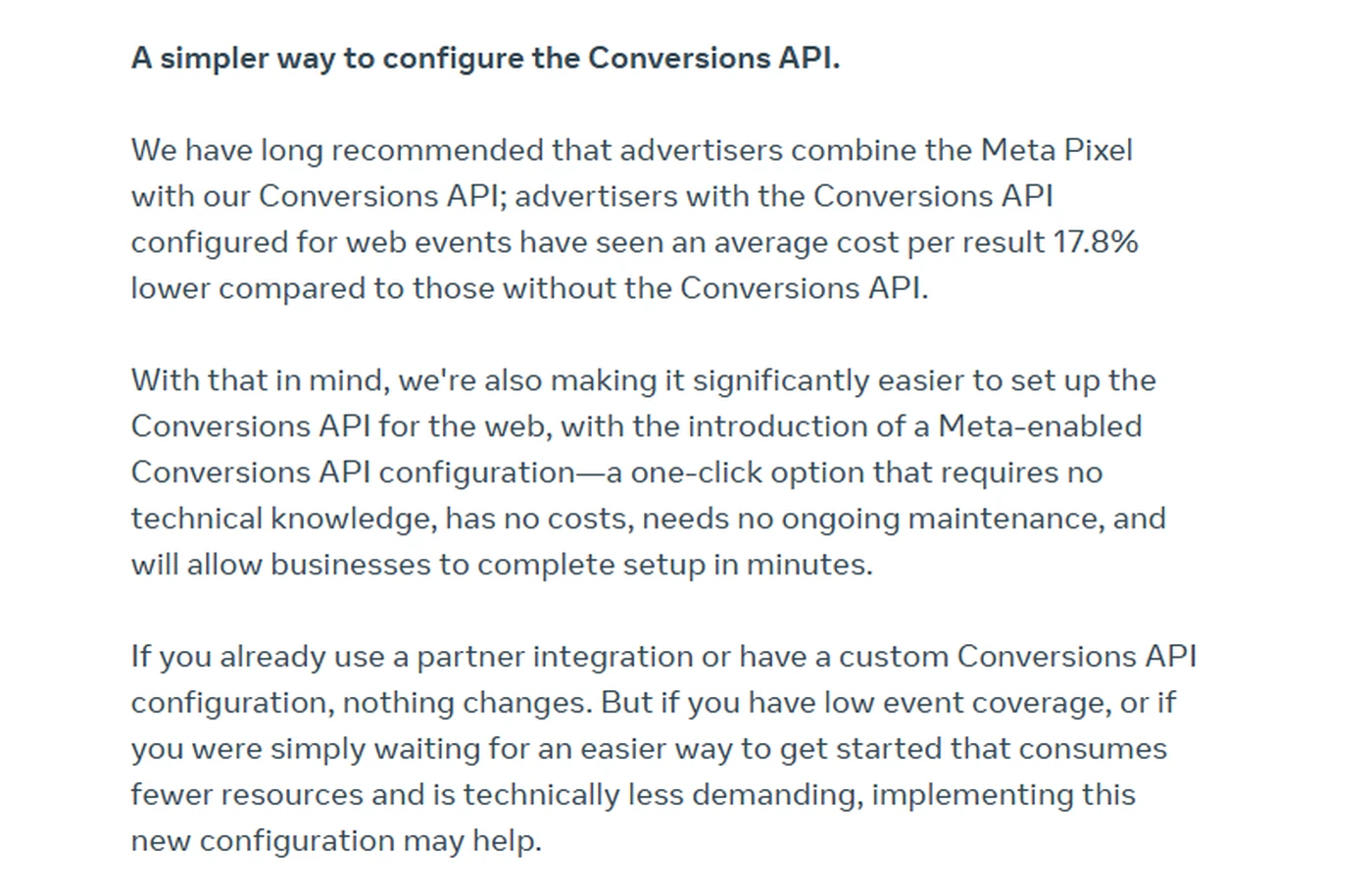
In April 2026 Meta introduced a Meta-enabled Conversions API configuration, aimed at businesses without a partner setup or a custom build.
The pitch is blunt: one click, no technical knowledge, no cost, no ongoing maintenance, done in minutes.
Meta also says that if you already run a partner integration or a custom CAPI setup, nothing changes for you. It's positioned as an easier road for accounts with low event coverage, not a replacement for what's working.
It's moving into the workflow
This is where it stops being a documentation page and starts being a product.
Meta isn't only telling advertisers how to build CAPI now. It's putting the setup inside the workflow, and increasingly offering to configure it for you.
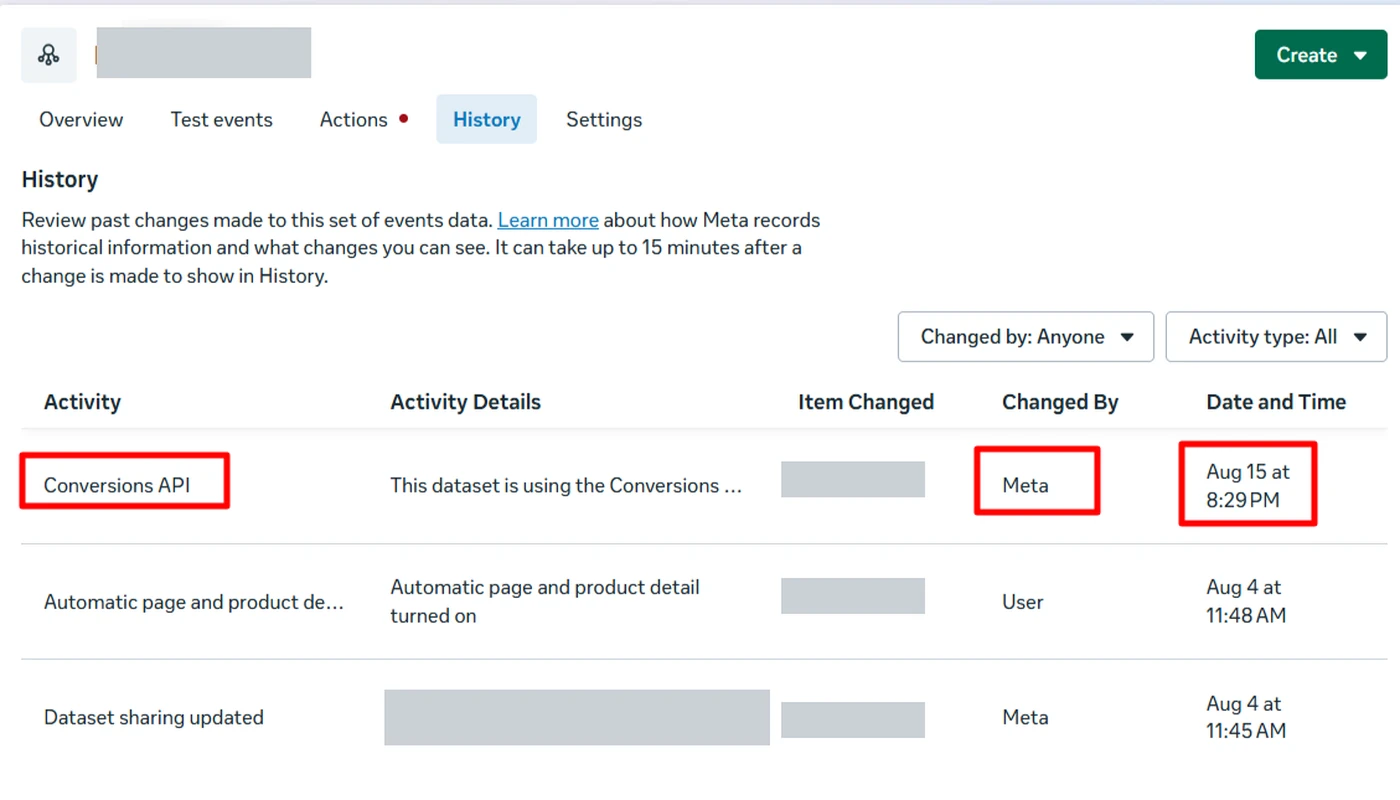
In one account I manage, the dataset History shows a Conversions API change attributed to Meta itself.
I wouldn't hold that up as proof that Meta switched CAPI on for every advertiser. It doesn't show that. It was just enough to make me look harder at what was changing in the account.
"Set up for me" is the real signal
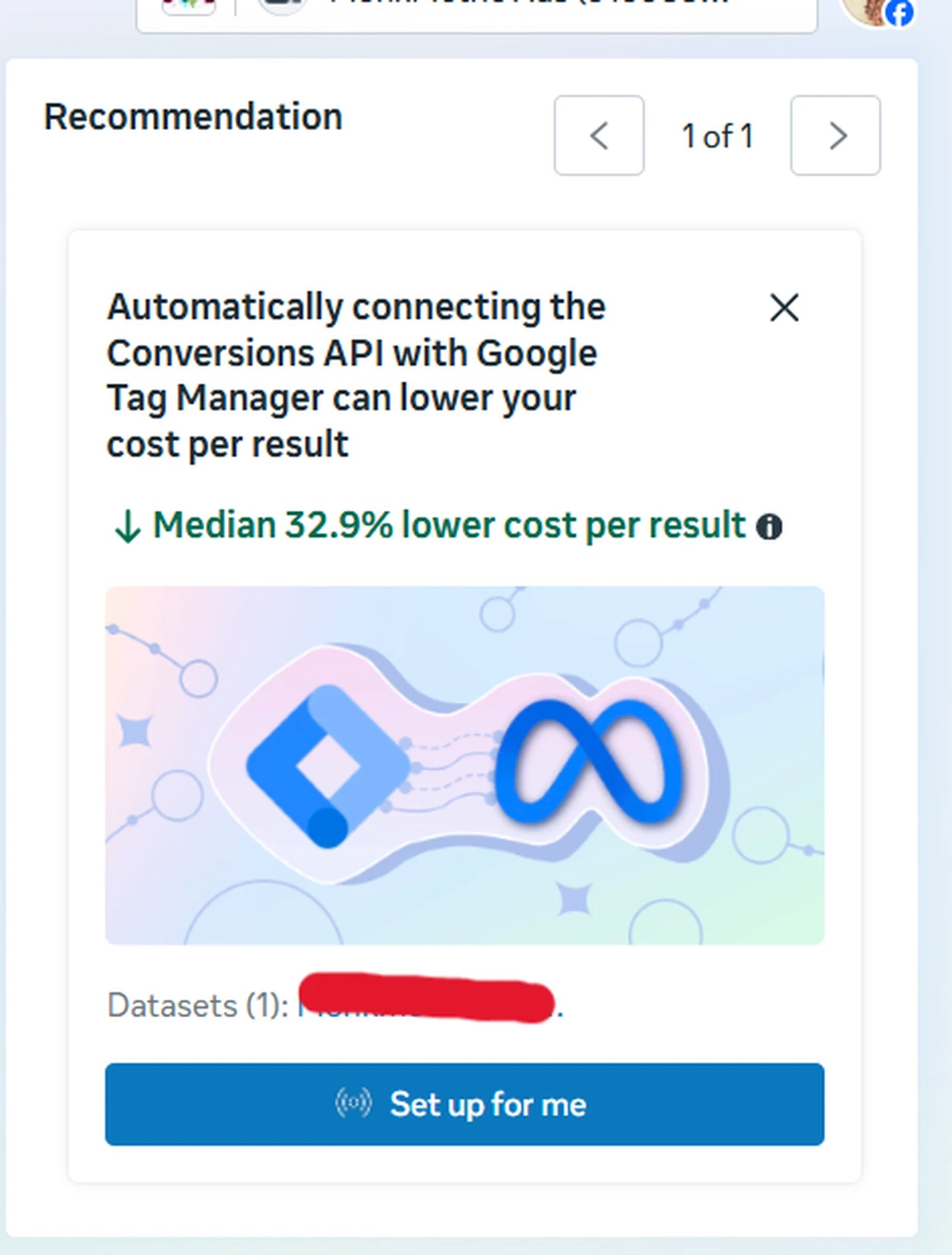
This is the part that got my attention.
Meta isn't saying "here's how to build CAPI." It's offering to connect the Conversions API to Google Tag Manager and handle more of the work itself. For a smaller advertiser that's a real shift in experience.
But an easier setup isn't a proven outcome. That button tells you implementation got simpler. It doesn't tell you the resulting data is more accurate, that server-side coverage is complete, or that you should tear out a third-party setup.
Check whether server events are actually arriving
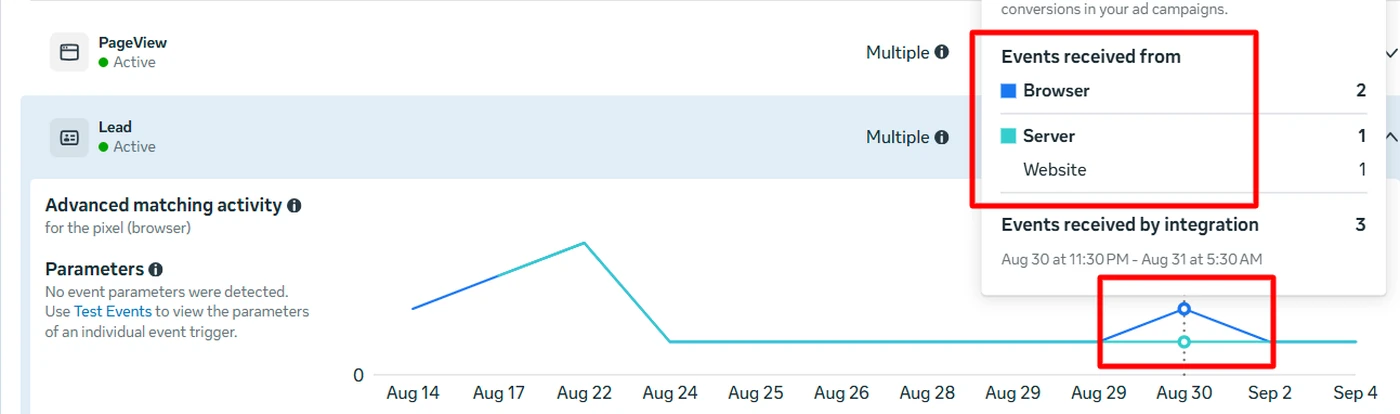
I care about this far more than a green "Connected" label.
Events Manager will show you browser and server events separately. That's the check. Not "is CAPI on" but "what is CAPI sending":
- Are server events actually coming through?
- Is server coverage improving, or flat?
- Are browser and server events being deduplicated?
- Are the right parameters going with them?
- Is Event Match Quality moving?
- Does any of it reconcile with what the business counts as truth?
Meta has been rolling out Event Coverage views that compare browser and server events directly, which makes this a lot less painful than it used to be.
Other marketers are seeing it too
This isn't something I'm inferring from one account.
Jon Loomer reported the one-click rollout in April, then followed up in May after it activated on his own account, writing that he could see server events coming through Events Manager for all web events. That's useful precisely because it's a real account, not a press release.
Meta's own Google Tag Manager template now carries a Meta-enabled Conversions API opt-in, and it says plainly that the advertiser authorises Meta to set up the integration on their behalf. The direction isn't ambiguous.
What changed, and what didn't
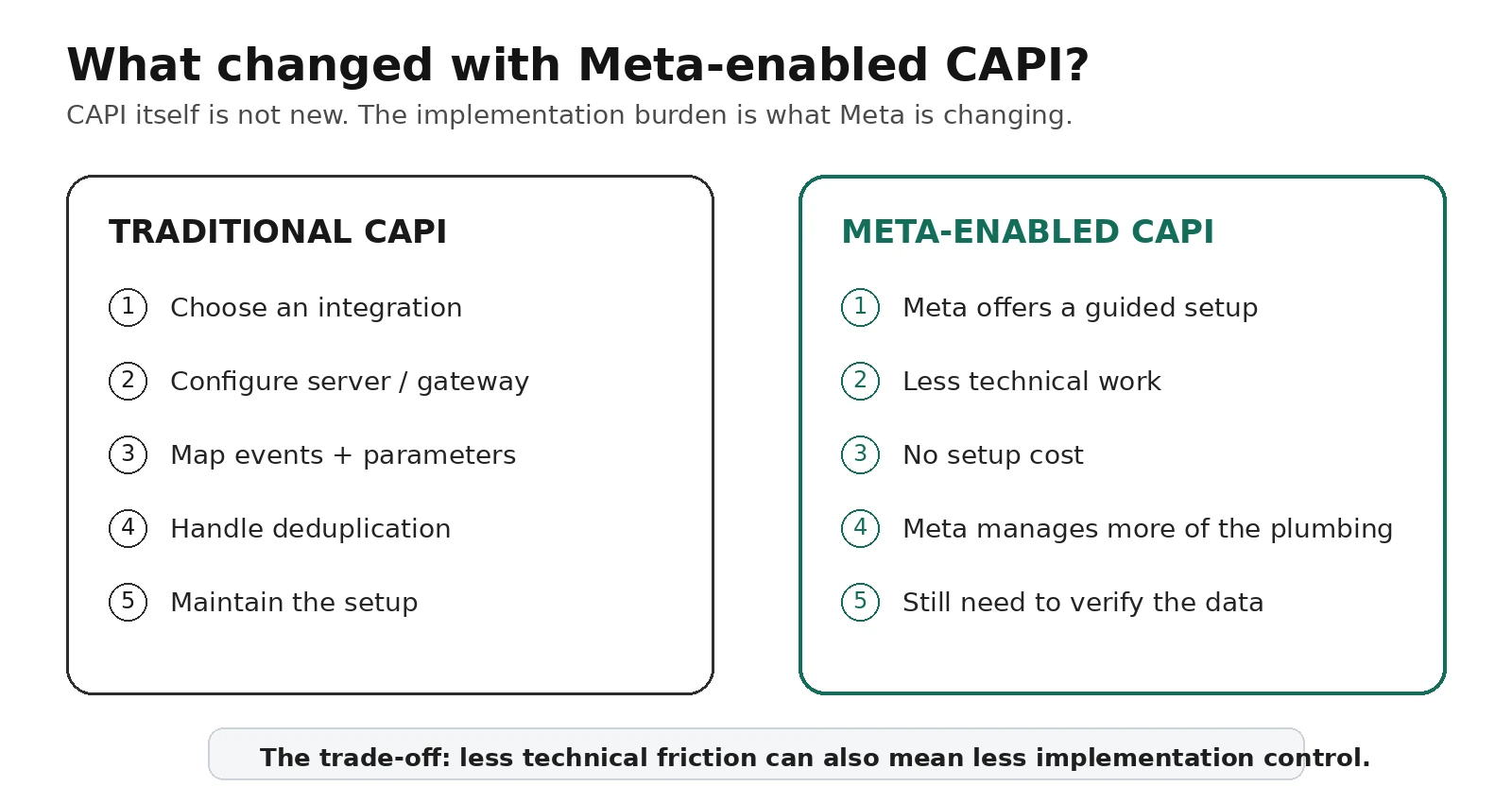
CAPI isn't new. What changed is how much of the technical work Meta is willing to absorb.
The old route meant a partner, server-side GTM, a CAPI Gateway, custom development, or some mix. The new one removes most of that.
Good for access. But it raises a fair strategic question: when the platform selling you the ads also runs more of the measurement infrastructure, how much control did you just trade for convenience?
Should you switch?
Depends entirely on what you've already got.
| Your setup now | What I'd do |
|---|---|
| Pixel only, no CAPI | Test the Meta-enabled setup. Server-side measurement beats none. |
| Partner CAPI already running | Don't switch just because a new button appeared. |
| Custom CAPI build | Keep it if it works and you can validate it. |
| CAPI Gateway plus GTM | Map what you have before adding another layer. |
If a business is on the Pixel alone because CAPI felt too technical, the managed option is a practical step forward. The realistic alternative was finding a developer, and that's been on the list for two years.
If CAPI already works, changing it because Meta made its own version easier just adds complexity. Test first. Compare second. Migrate only when the evidence says so.
More data is not better data
I want to be careful here.
In one client account I've seen a discrepancy as high as 5x between systems. I'm not offering that as evidence against Meta's managed CAPI, and I'm not saying its new setup caused it. It's just why I get uneasy when anyone promises a setup will deliver "5x more data".
More events aren't automatically better events. Are the right ones firing? Consistently? Are duplicates handled? Do the values match the source of truth? Is coverage genuinely improving, or is the same conversion being counted twice?
The test isn't how much data shows up in Events Manager. It's whether that data is accurate, deduplicated and actually useful for optimisation.
Convenience is not control
There's real upside here. Meta is removing friction that has blocked small businesses, agencies and stretched teams for years.
There's also a trade. The more Meta manages, the more of the implementation sits inside Meta's own ecosystem. With a custom or third-party setup you control what gets sent, when, how it's transformed and how it's maintained. With a managed one you hand that to the platform that also uses the data to optimise your ads.
That doesn't make it a bad choice. It makes it a strategic one.
Meta now sits comfortably across the whole loop: ads, data, measurement, optimisation. Less friction for advertisers, and more of the measurement relationship inside one company.
Is Meta helping small businesses? Yes, I think that's genuinely part of it. Is it also a smart move to make its own measurement infrastructure the path of least resistance? That's a fair question, and I wouldn't answer it by switching everything over tomorrow.
What I'd actually do
For years there was a technical divide. Big advertisers had developers and proper server-side tracking. Everyone else had the Pixel and not much else. Meta is closing some of that gap by turning CAPI from an implementation project into a product feature. That's a real change.
But the job doesn't end when the button says Connected. That's when it starts: check what's being sent, where it's coming from, whether browser and server reconcile, and whether any of it helps you make a better decision.
Meta didn't invent CAPI. It's making the plumbing disappear. We get to decide how much of that plumbing we're comfortable handing over.
The easiest setup isn't automatically the best one. The best one is the one whose data you trust.
The rest of this is yours, free.
Enter your email to keep reading — and unlock every Massive Impact resource.
No spam. One email unlocks every Massive Impact resource.