What is generative engine optimization (GEO)?
Optimizing to be the source a generative engine cites, not the page a search engine ranks.
Generative engine optimization is optimizing to be the source a generative engine cites, rather than the page a search engine ranks. The unit of success changes: classic SEO wins a position on a results page, GEO wins a mention inside a generated answer where there are no positions, only sources. In practice that means writing self-contained passages that answer one question completely, and making sure the machine can read them without executing any code.
What is answer engine optimization (AEO), and how is it different from GEO?
AEO targets AI Overviews and snippets; GEO targets chat assistants. Same discipline, two surfaces.
Answer engine optimization targets the direct-answer surfaces: AI Overviews, featured snippets, and People Also Ask, where an engine extracts one answer and shows it above the links. GEO targets conversational assistants like ChatGPT, Perplexity and Claude that generate a response and cite sources. The techniques overlap heavily, and in practice they are the same discipline pointed at two surfaces, which is why we treat them as one layer rather than two products.
Does AI search matter for a local service business?
Yes, and sooner than most owners expect. The questions people ask an assistant are the high-intent ones.
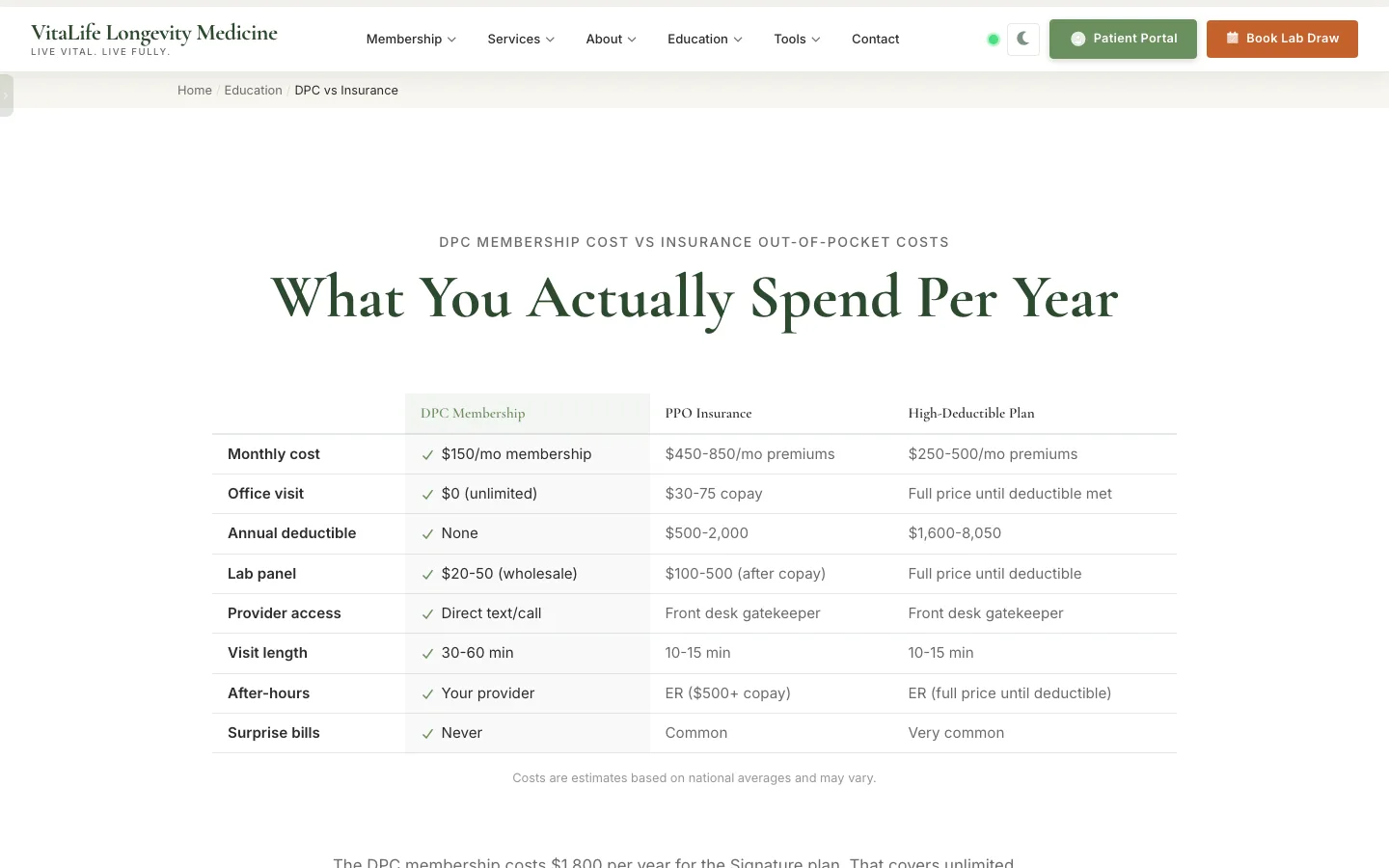
Yes, and earlier than most owners expect, because the questions people ask an assistant are exactly the high-intent ones: who should I hire, what does this cost, is this worth it. A local business that is invisible to those systems is absent from the moment the decision is made. VitaLife Longevity Medicine, a clinic we build for, had patients arrive through Grok and ChatGPT while running zero paid ads.
How do you actually get cited by an AI engine?
Answer one question completely in a self-contained passage, server-rendered so a no-JavaScript crawler can read it.
Publish content that answers one question completely in a single self-contained passage, server-render both that content and its structured data so a crawler that runs no JavaScript can still read it, allow the AI crawlers rather than blocking them, and keep your business facts identical everywhere they appear. Most sites fail on the second point without knowing it, because content assembled in the browser looks fine to a human and is invisible to the machine.