How to Market Your Escape Room This Easter and Fill Every Time Slot
Plan your Easter escape room marketing the right way. Learn how to create offers, run social campaigns, and fill every booking slot before the holiday rush.

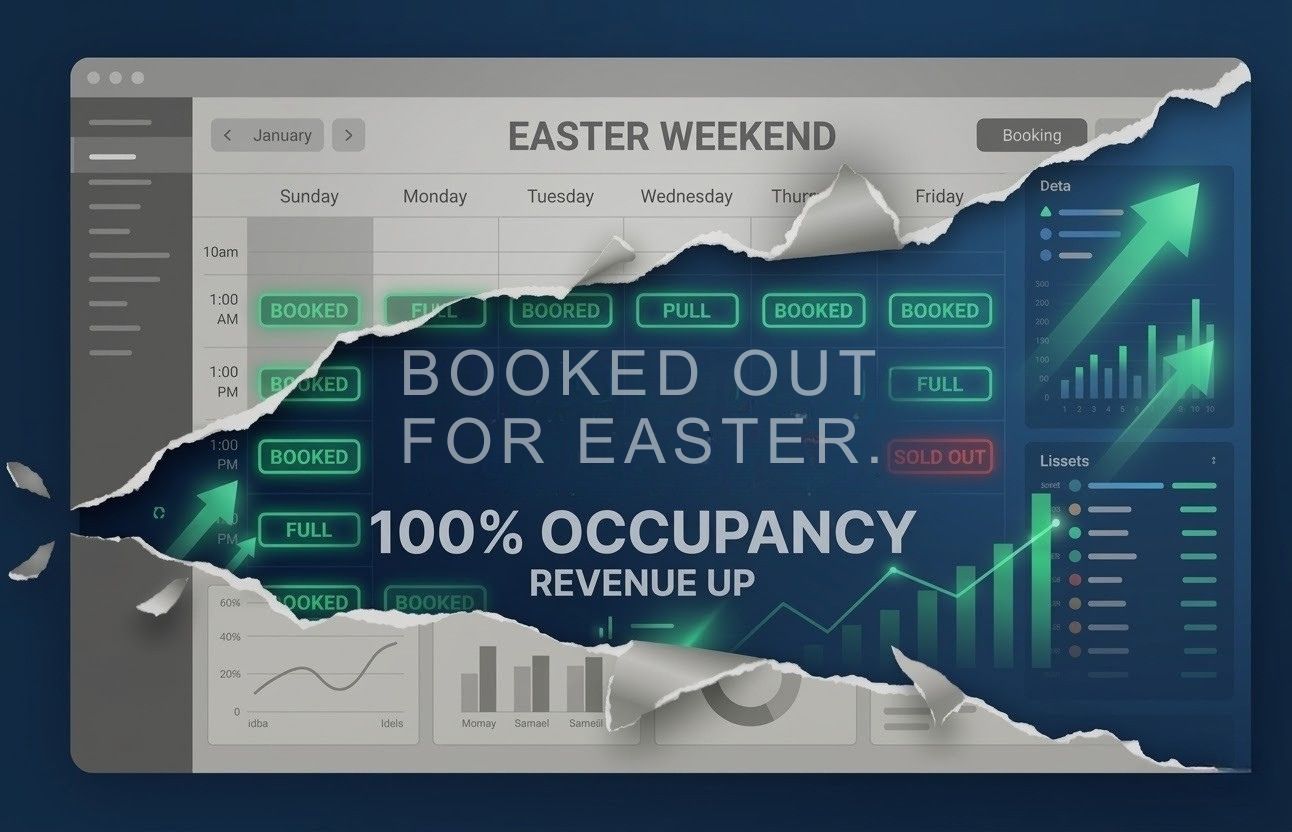
Easter Is Coming. Is Your Escape Room Ready?
Family groups are out there right now searching for Easter weekend plans. Most escape rooms have nothing seasonal ready to catch that demand.
Stop leaving those bookings on the table.
This guide walks through building an Easter offer, running social media marketing, and using escape room advertising that actually converts. You get specific timelines, influencer outreach tactics, and paid channel strategies. No big budget required. No marketing team needed.
Pick one tactic. Move fast. The window shuts quickly.
Why Easter Is One of the Biggest Booking Opportunities Escape Rooms Miss Every Year
School breaks clear schedules. Families need somewhere to go together.
How Family Search Behavior Shifts During Easter Week
Local activity searches spike hard in the 10 days around Easter. Families with kids suddenly have free time and no plan. They search for group activities, local entertainment, and things to do with mixed-age groups. Escape rooms fit that brief perfectly. The intent is high and the timing is predictable every single year.
Most escape room owners don’t run targeted Easter campaigns. That’s a real missed opportunity.
What Happens When Escape Rooms Do Nothing for Easter
Generic availability doesn’t stand out during a holiday weekend. Competitors running Easter promotions look more relevant in search results. They get the clicks, the bookings, and the revenue. You get overlooked. Without seasonal framing in your marketing, you’re invisible to high-intent buyers. Late campaigns underperform badly. The window is narrow and rewards whoever moves first.
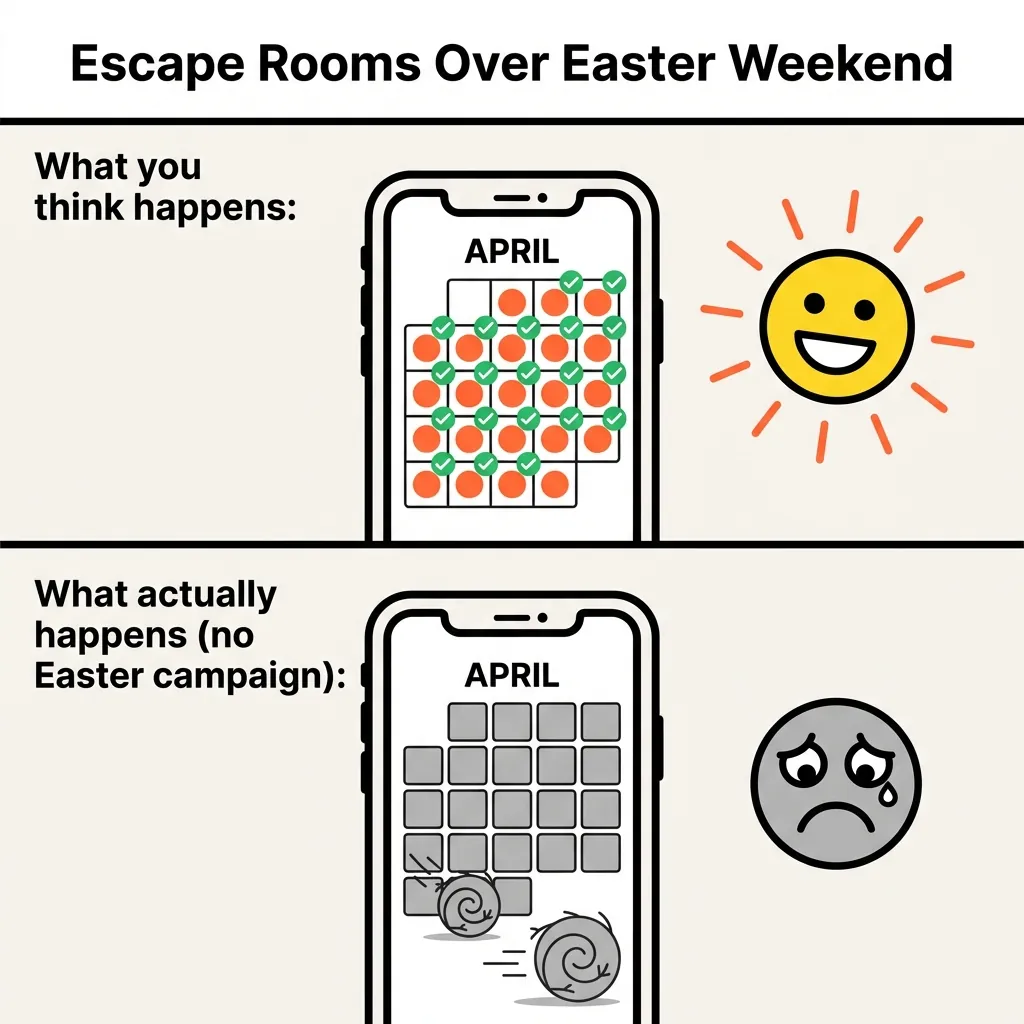
Inaction carries a real cost. Every unbooked slot during Easter week is revenue you simply can’t recover.
Build an Easter Offer That Actually Makes Families Book
Your marketing is only as strong as the offer sitting behind it.
The Anatomy of an Easter Package That Converts
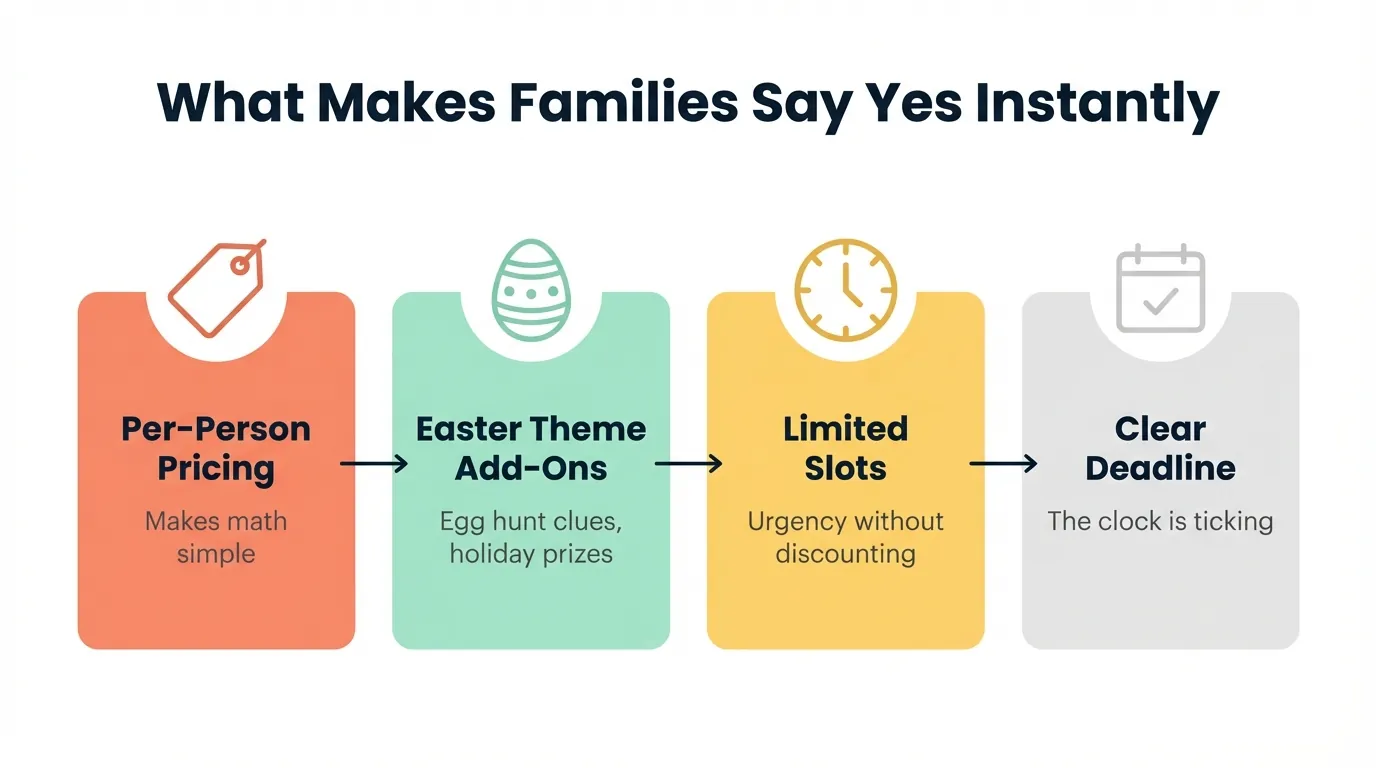
Group packages with a per-person price feel lower-friction than flat room rates. Families compare costs fast, and per-person pricing makes the math simple. Easter-themed add-ons like egg hunt clues or holiday prizes raise perceived value without touching your base price. Limited-slot framing builds urgency without discounting.
Build the package before you promote it. Don’t run ads for an offer you haven’t finished putting together. A clear, specific Easter package converts far better than a vague “book now” message. Think about what makes a family say yes on the spot: a fair price, a fun theme, and a deadline.
Families book when the decision feels easy and the clock is ticking.
How to Frame Your Offer for Families vs Corporate Groups
Easter draws two distinct buyer types. Families with kids want fun, age-appropriate challenge, and a shared memory. Corporate groups want a pre-holiday team outing with minimal planning effort. Family messaging should lead with excitement and safety. Corporate framing should emphasize team bonding and a genuine break from office routine. Two ad sets or two landing page variations can serve both audiences from the same campaign.
Run both. Double your reach without doubling your budget.
Social Media Marketing Moves That Drive Escape Room Bookings Before Easter
Easter bookings begin on social media. Most families find local options through Instagram Reels, Facebook events, and posts their friends share. Your escape room needs to appear there before those families commit to a plan.
The 14-Day Easter Content Calendar That Fills Your Feed
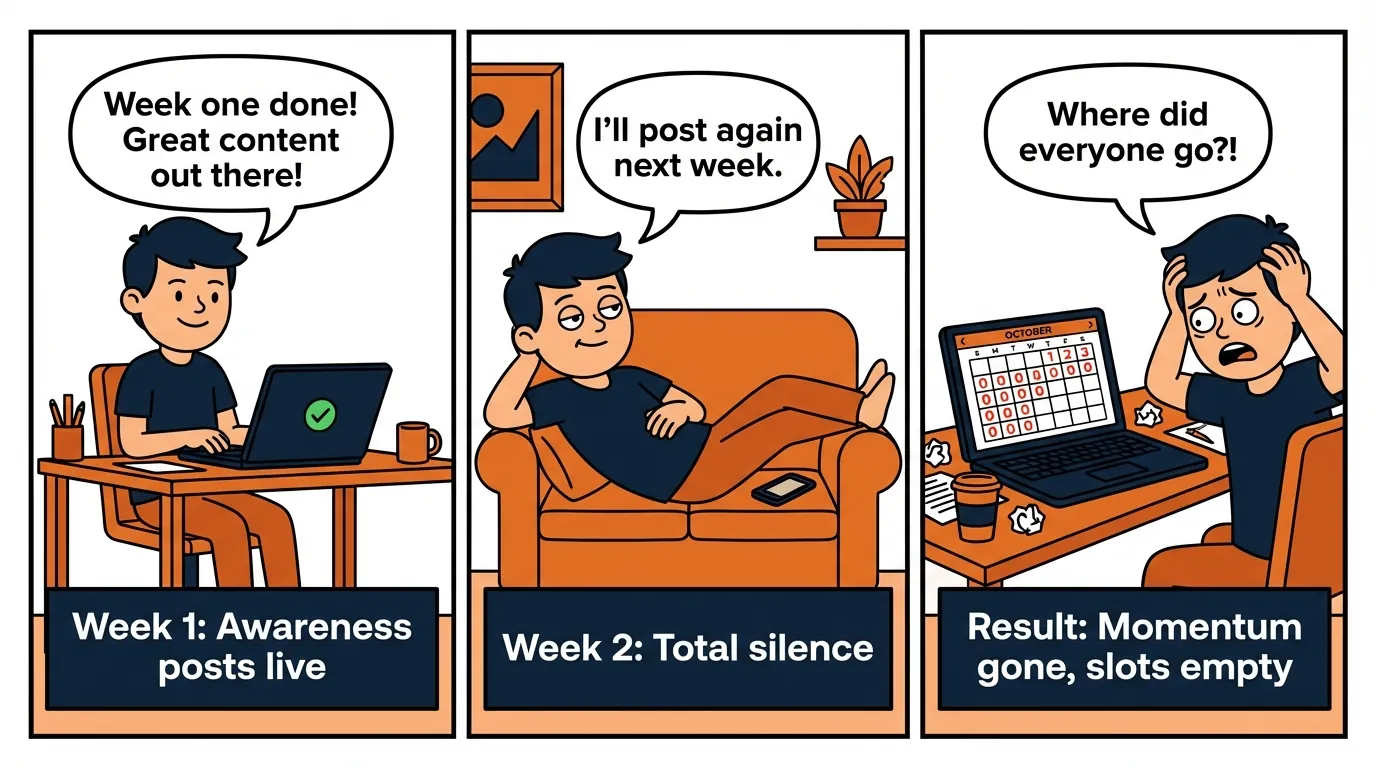
Week one is pure awareness. Post behind-the-scenes footage, theme reveals, and testimonials from past guests. Show people what the experience actually feels like. Reels consistently outperform static posts for local discovery, so short video comes first. Week two pivots entirely to urgency. Post countdowns, remaining slot alerts, and last-chance customer stories. Facebook event promotion in week two reaches people actively sorting out their Easter weekend. Keep posting daily through the final five days. Consistency carries more weight than polish during a tight seasonal window.
One week of silence destroys momentum you spent two weeks building.
How to Use Facebook Events and Community Groups to Get Free Exposure
Facebook Events get indexed in local activity searches. Build one for your Easter special and write a specific description. Drop it into local family groups, parent communities, and neighborhood pages. Frame it as a genuine recommendation, not an advertisement. Ask staff and loyal customers to share the event and grow your organic reach at zero cost.
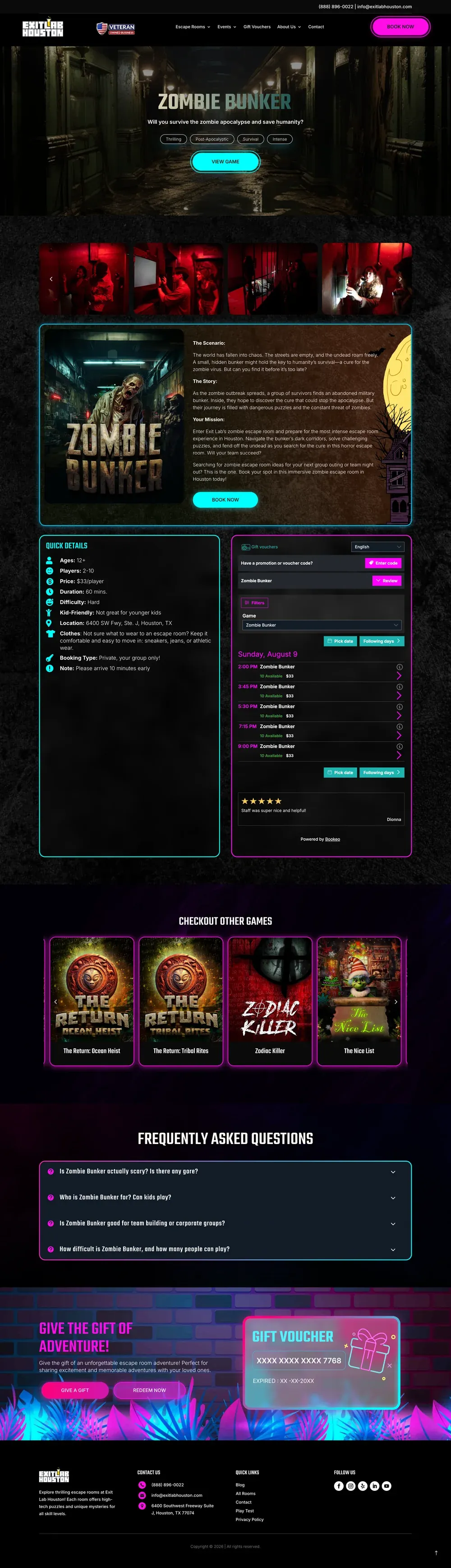
Check out this escape room marketing case study to see what a focused seasonal campaign looks like in practice.
Free exposure compounds fast when real people spread the word.
For escape room owners who want the execution handled rather than going it alone, AI Brand Factory is a practical resource. Load your brand details once and it generates seasonal social content, captions, and promotional copy that matches your voice without needing a content team or burning hours on writing.
Producing Easter Content Fast Without a Content Team
Consistent posting takes a system, not just effort. Most escape room owners know they should post more but can’t find the hours. Brand-loaded content tools cut production time significantly and keep your voice steady across every post.
How Influencer Marketing Puts Your Escape Room in Front of Local Families
Influencer marketing sounds expensive. For local escape rooms, it doesn’t have to be.
You don’t need a national brand deal to fill your Easter slots.
Why Micro-Influencers Outperform Big Accounts for Local Escape Rooms
Local creators with 2,000 to 15,000 followers drive more relevant bookings than national accounts. Their audience is geographically concentrated and trusts their recommendations. Family and parenting creators in your city reach exactly the Easter buyer profile. One authentic post from a trusted local voice can fill a full weekend. Micro-influencers pull higher engagement rates than large accounts because their communities are tighter, and that engagement translates directly into local bookings.
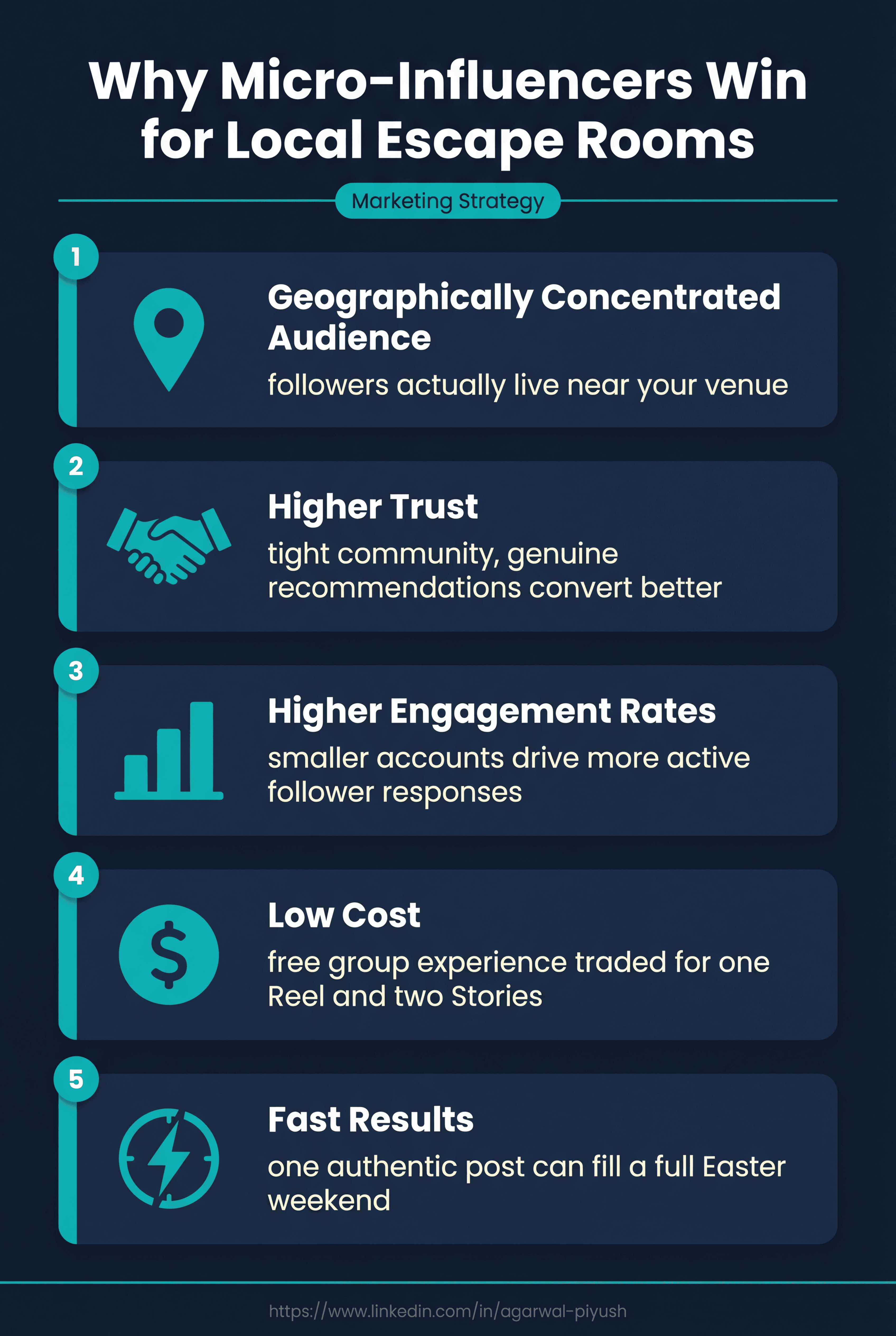
Target creators whose followers actually live near your venue.
The Simple Outreach Formula That Gets Influencers to Say Yes
Search Instagram location tags and local hashtags to find relevant creators in your city. Offer a free group experience in exchange for one Reel and two Stories. Give them a simple one-page brief with your Easter offer details and booking link. Keep the ask clear and the trade fair.
Most local creators say yes to free experiences when the ask is simple. Follow up once if you don’t hear back. Don’t over-complicate the brief. A solid influencer post during Easter week can generate bookings for days afterward.
Influencer marketing for escape rooms works when you target locally and keep the exchange straightforward.
Running Google Ads and Email Campaigns That Convert Easter Traffic Into Bookings
Paid and owned channels work together to capture Easter demand at every stage.
Setting Up a Google Ads Campaign for Easter Escape Room Searches
Escape room advertising on Google targets people who are already searching with purpose. Check out how Google Ads for local service businesses perform when campaigns are built around local intent. Target keywords like “escape room near me Easter” and “family activities this Easter.” Use location radius targeting to reach people within 20 miles of your venue. Run your campaign for three weeks before Easter, with a daily budget matched to your room capacity. Don’t burn through money early, shift more budget into the final 10 days when purchase intent peaks.
The Email Campaign That Reactivates Past Customers Before Easter
Past customers convert at three to five times the rate of cold traffic. A two-email sequence costs almost nothing compared to paid acquisition. See how email paired with ads drove results in this Google Ads revenue growth case study. Email one announces your Easter offer and opens early access booking. Email two goes out five days before Easter carrying a “last slots available” message.
Paid vs Organic Tactics, Choosing What Fits Your Budget
Organic social and email are high-ROI but demand consistent effort starting three to four weeks out. Google Ads produce faster results but need a minimum daily budget to compete locally. Most escape rooms benefit from pairing one paid channel with two organic channels.
For escape room owners who want Google Ads and follow-up systems handled without building everything themselves, Massive Impact is a practical done-for-you resource, it manages ad setup, targeting, and customer follow-up so execution runs without the owner figuring it out alone.
Pick your channels based on timeline and budget. Both paths work when you stay consistent.
Your Easter Marketing Timeline So Nothing Gets Launched Too Late
Timing decides whether your campaign fills slots or misses the window completely.
Week by Week Countdown to a Fully Booked Easter
Four weeks out, finalize your Easter offer and begin content production. Build your landing page and brief any influencers you’re working with. Three weeks out, launch Google Ads, kick off your social content calendar, and post your Facebook Event. Two weeks out, influencer content goes live and you send email one to past customers. One week out, shift to urgency posts, send your final email, and redirect ad spend toward retargeting people who visited but didn’t book. Every week carries a specific job. Miss one and the next week gets harder.
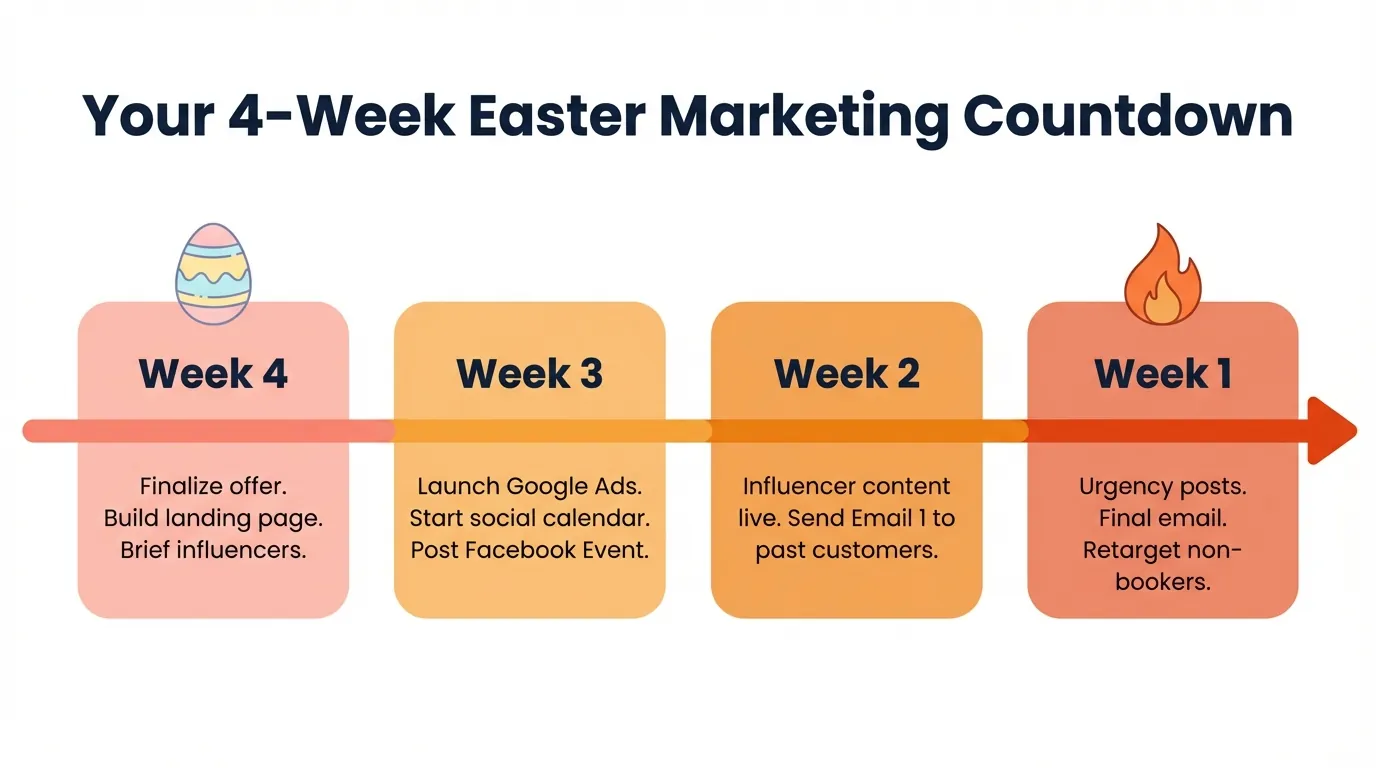
The escape room marketing calendar only works when you follow it in sequence. Seasonal escape room campaigns that launch late consistently underperform. Start four weeks out, not two.
Don’t skip week four to save time. You’ll spend twice the effort trying to catch up in week two.
Don’t Wait Until the Week Before Easter to Start
The Easter booking window is tight. Early movers grab the reservations. Late campaigns pick through what’s left.
Start with your offer.
Build it out first, then choose one paid channel and one organic channel to push it through. Google Ads or influencer marketing on the paid side. Email or social content on the organic side. Run one tactic this week rather than mapping out all of them next week. Marketing escape rooms over Easter doesn’t need a flawless campaign, it needs a live one.
The rest of this is yours, free.
Enter your email to keep reading — and unlock every Massive Impact resource.
No spam. One email unlocks every Massive Impact resource.
![[Case Study] - 2.5x Increase In Escape Room Traffic & 50% Growth In Revenue Y-O-Y](https://media.winmassiveimpact.com/migrated/winmassiveimpact.com/wp-content/uploads/2022/03/CASE-STUDY.jpg)