ChatGPT Just Announced Ads: What Every Marketer Needs to Know Right Now
OpenAI just confirmed ads in ChatGPT. Discover what the announcement reveals, what it hides, and how advertisers should prepare for AI-powered conversation ads.


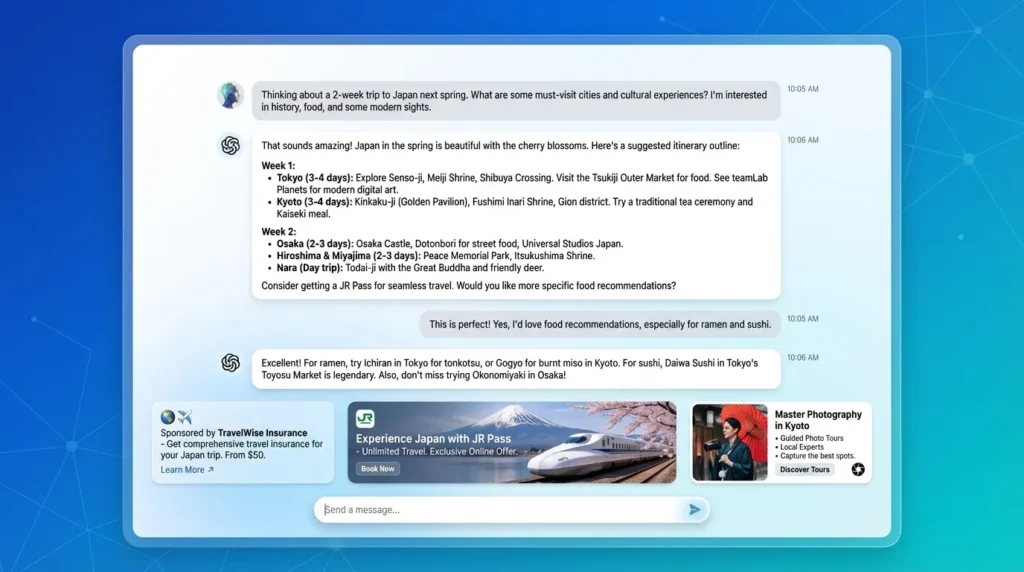
OpenAI made it official: ads will appear in ChatGPT.
Users on free and Go-tier plans? They’ll start seeing them shortly.
What OpenAI Actually Said About Ads in ChatGPT
OpenAI’s announcement revealed a tiered approach to monetization. The company will show ads only to specific user segments.
Plus, Pro, and Enterprise subscribers stay completely ad-free. Free-tier users and Go-tier users will see advertising.
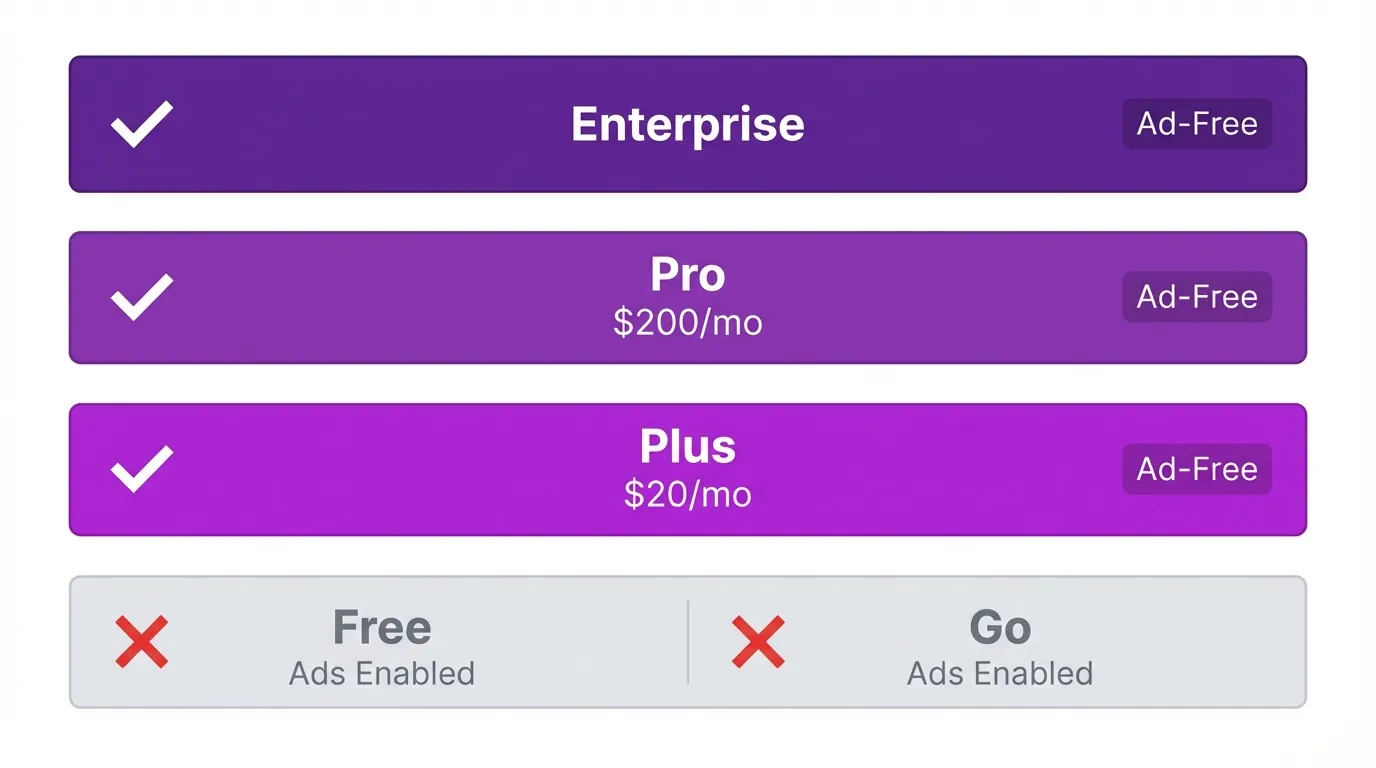
OpenAI protects its premium revenue stream while monetizing free access. The model separates ads from AI responses technically and visually.
User conversations won’t be shared with advertisers under the stated privacy framework.
This is conversation-based advertising with guardrails.
The Tiered Monetization Strategy
OpenAI draws a clear line between paying and non-paying users. Free and Go-tier users fund their access through advertising exposure. Plus subscribers at $20 monthly avoid ads entirely. Pro users paying $200 monthly get ad-free experiences too. Enterprise customers maintain completely clean interfaces.
The strategy makes sense financially. Premium tiers generate predictable subscription revenue. Free tiers need alternative monetization to justify infrastructure costs.
The Trust Architecture Promise
OpenAI executive Assad Awan emphasized separation between ads and model outputs. The AI won’t know when ads are present. It can’t reference advertising unless users explicitly ask about it.
Conversations stay private from advertisers according to the announcement. Health and politics won’t trigger ads at all. Users can reduce personalization or upgrade to remove ads.
The framework follows OpenAI’s stated priority order. User trust comes before user value before advertiser value before revenue.
Why This Could Be Bigger Than Search Ads
ChatGPT captures users mid-decision in active problem-solving mode. Traditional search shows intent through queries. Conversation-based advertising intercepts planning and research in real time.
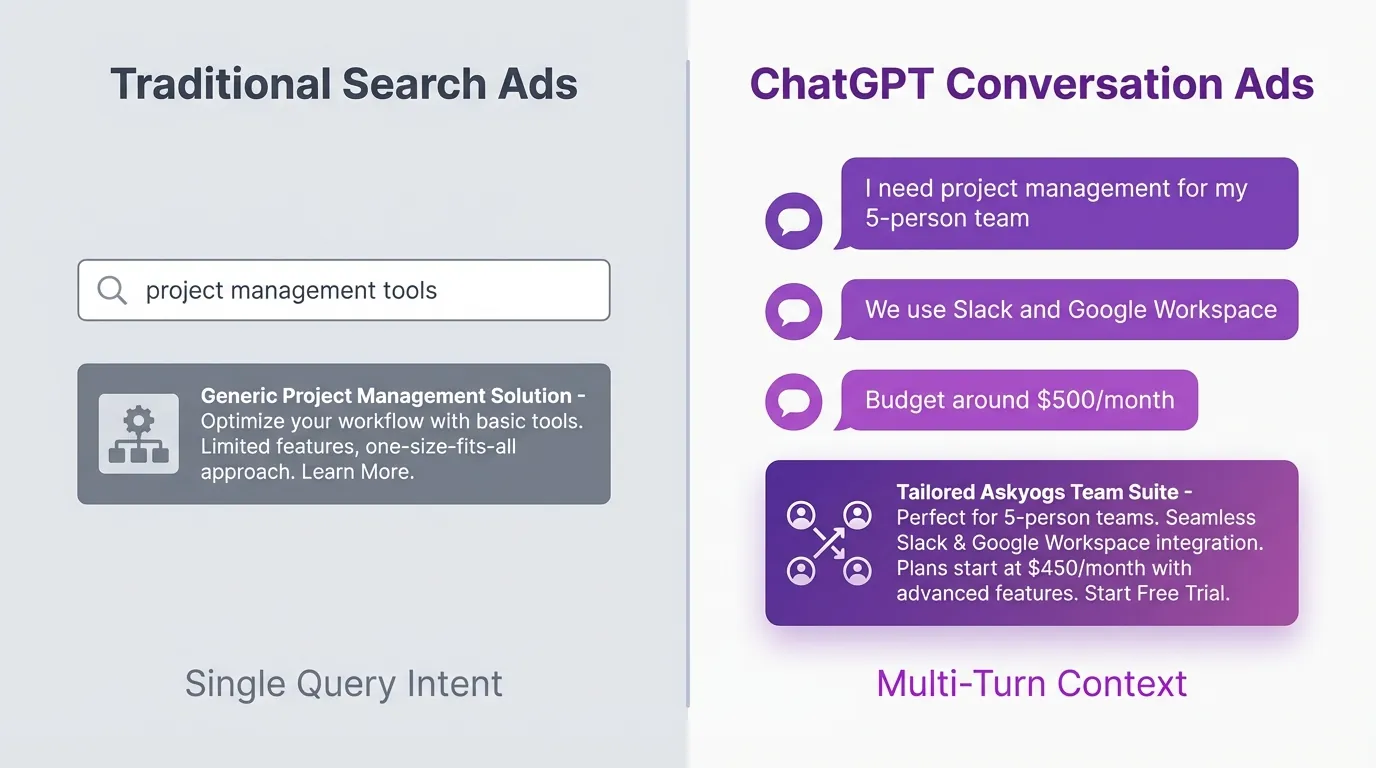
The contextual relevance potential exceeds keyword matching.
Users aren’t passively browsing when they’re in ChatGPT conversations. They’re actively working through decisions and exploring solutions.
Ads appearing in this context could deliver higher conversion rates. The AI model understands conversation context beyond single queries.
This changes everything about intent-based advertising.
The Intent Advantage Nobody’s Talking About
Search ads respond to expressed intent through keywords typed into boxes. ChatGPT ads could respond to implied intent revealed through multi-turn conversations. The AI understands what users are trying to accomplish contextually.
Someone asking about project management isn’t just searching for tools. They’re revealing team size, workflow challenges, and integration requirements through conversation. Ads could match this deeper understanding of actual needs.
Traditional channels can’t access this conversational intelligence layer.
How AI Agents Could Democratize Advertising for SMBs
OpenAI mentioned AI becoming an advertising agent for small businesses eventually. Instead of complex dashboards, SMBs could describe goals in plain language. The AI would handle campaign creation, targeting, and optimization automatically.
This eliminates the specialist barrier that keeps small businesses out. Current ad platforms require expertise in bidding strategies and audience targeting. AI-assisted advertising could level the playing field significantly.
Small businesses gain access to sophisticated advertising without hiring specialists.
The Five Questions OpenAI Didn’t Answer
The announcement left critical details undefined for advertisers planning budget allocation. Format specifications remain unclear across multiple dimensions.
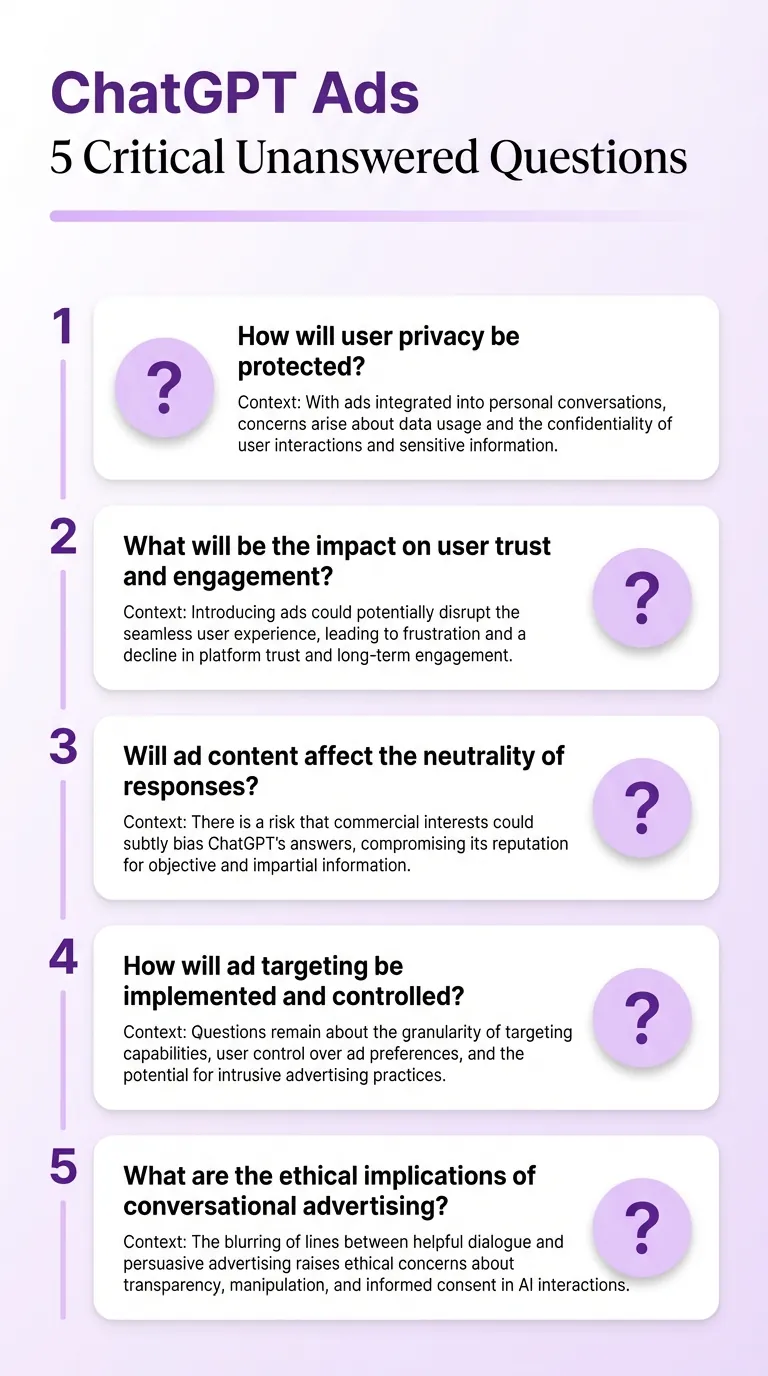
- What actually counts as an ad in this context?
- Where do ads appear in the interface?
- How does targeting work without conversation access?
- What prevents advertiser manipulation of AI responses?
OpenAI hasn’t clarified these fundamental mechanics yet.
Advertisers need answers before committing significant budgets to this channel.
What Actually Counts as an Ad
- Is it a sponsored answer card integrated into responses?
- Is it a sponsored link separate from model output?
- Is it a marketplace-style listing showing relevant products?
The format definition affects everything from creative production to measurement strategy. UI placement determines visibility and user experience impact. Nobody knows what this actually looks like in practice yet.
How Targeting Works Without Conversation Data
OpenAI says user conversations won’t be shared with advertisers for privacy. That raises immediate questions about targeting signal availability. How do advertisers reach relevant audiences without conversation context?
- What attribution methods will track conversions from ChatGPT ads?
- How do advertisers measure campaign performance without conversation data access?
- The targeting and measurement infrastructure remains completely undefined.
The Trust Integrity Gap
- Can advertisers indirectly influence AI responses through advertising spend?
- What prevents pay-to-rank behavior in conversation-based recommendations?
- How does OpenAI enforce policies against misleading claims in this format?
The safeguards against dark patterns need clear definition. Advertisers and users both need transparency about influence boundaries. Trust breaks easily in AI contexts when commercial interests blur lines.
How Advertisers Should Position Right Now
- Start with small test budgets if you get early access
- Wait for format clarity before major commitments
- Monitor results from early adopters in your vertical
- Let others absorb the learning curve costs initially
Strategic patience beats premature budget allocation in undefined channels.
Different business types will perform differently in conversation-based advertising contexts. Local services might convert well through conversational discovery. SaaS products could struggle without clear comparison frameworks.
Test Budget Allocation Strategy
Allocate 5-10% of experimental budget maximum to initial ChatGPT ad tests. Establish clear success metrics before launching campaigns. Track cost per acquisition against existing channels for comparison.
Don’t shift budget from proven channels until you see consistent performance. Early results will be volatile as the platform matures. Wait for stable performance data before scaling investment.
Prepare for Conversation Funnel Design
Traditional search funnels assume users click through to landing pages. Conversation-based advertising might keep users inside ChatGPT for discovery. Your funnel design needs to accommodate interactive dialogue versus static information.
Partners like MASSIVE IMPACT help advertisers evaluate whether ChatGPT ads fit their channel mix. They optimize budget allocation across emerging platforms based on actual performance data. Conversation CTAs require different creative approaches than traditional ad formats.
Conclusion
ChatGPT ads create a real chance for discovery advertising built around conversations.
Critical questions about format, targeting, and trust? Still unanswered.
The rest of this is yours, free.
Enter your email to keep reading — and unlock every Massive Impact resource.
No spam. One email unlocks every Massive Impact resource.