Local SEO for small business that ranks in the map pack. Own the rankings.
Ads reset to zero the month you pause them. SEO keeps producing. Our local SEO for small business builds an organic engine you own, so lead cost falls instead of resetting, and the traffic keeps coming when the ads go quiet.
6X organicBay State's traffic, off the paid treadmill
Organic and AI-search visibility for local service businesses, tracked every month
Why owners keep us
An engine you own, not a meter you feed.
Ads rent you a position for as long as the money runs. SEO builds an asset that keeps producing after the spend stops. Three things separate the two.
The engine is yours
The rankings and the pages that earn them are an asset you keep. When the ad budget pauses, the organic traffic keeps arriving, because you own it rather than rent it.
Lead cost falls
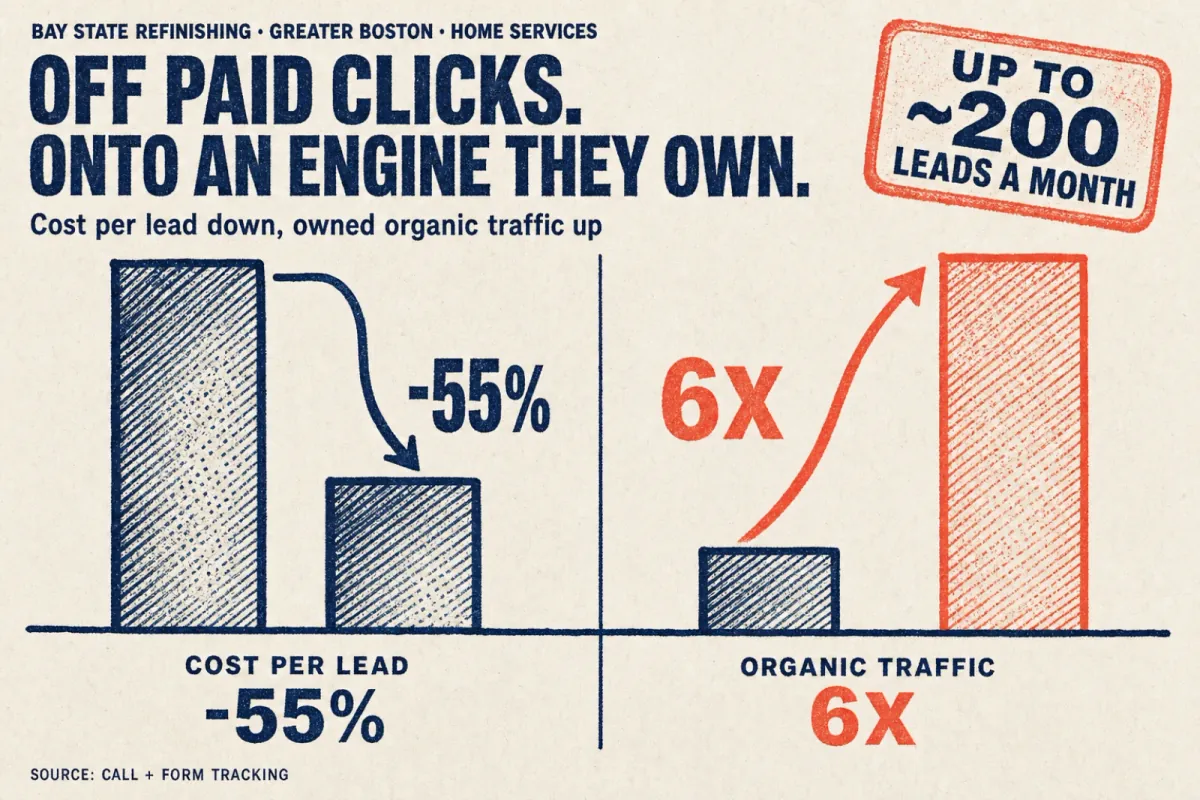
Paid resets to zero every month. As the owned engine grows, the cost of each lead drops instead of resetting. Bay State's fell 55% once organic carried the load.
One build, both searches
The same server-rendered pages that rank in Google are the ones an AI engine can read and cite. You build it once, and you show up in Google and in the AI answer both.
Own the topic, be the answer
SEO in 2026 rewards the specialist who owns a topic.
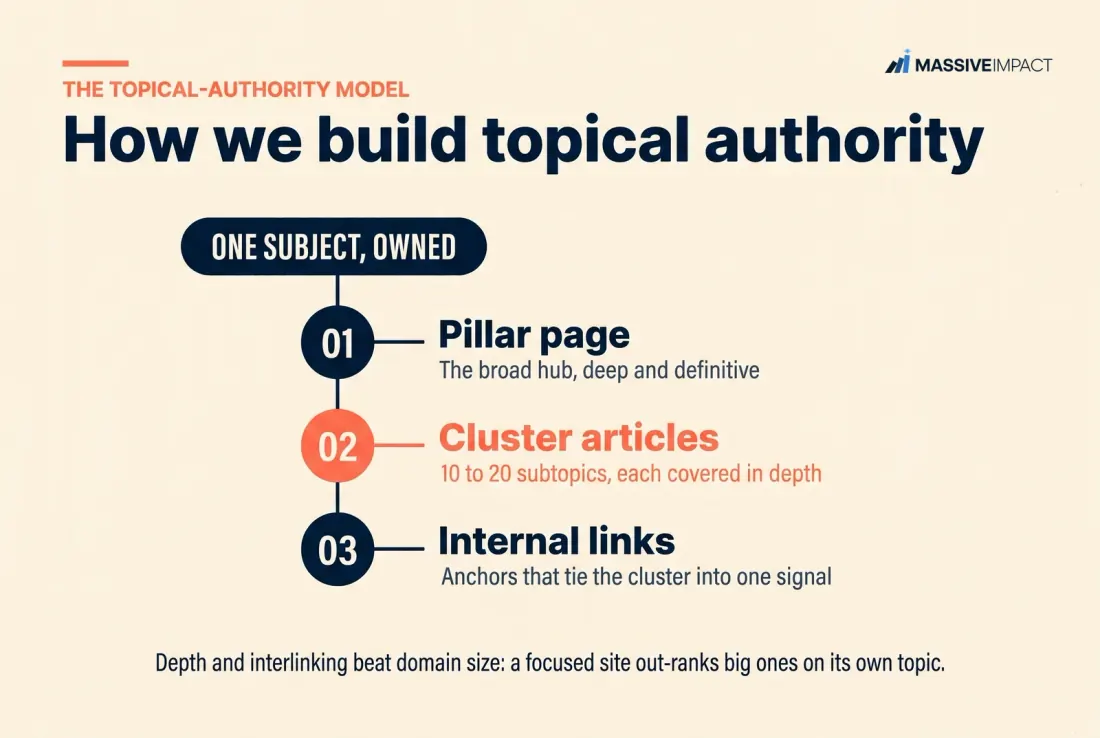
Search moved from matching keywords to understanding topics and entities. That is the opening for a local specialist: a site that covers one subject in real depth can out-rank far bigger sites on that subject, and the same trust signals that rank you on Google decide which sources the AI engines quote. We build for both at once, in two moves.
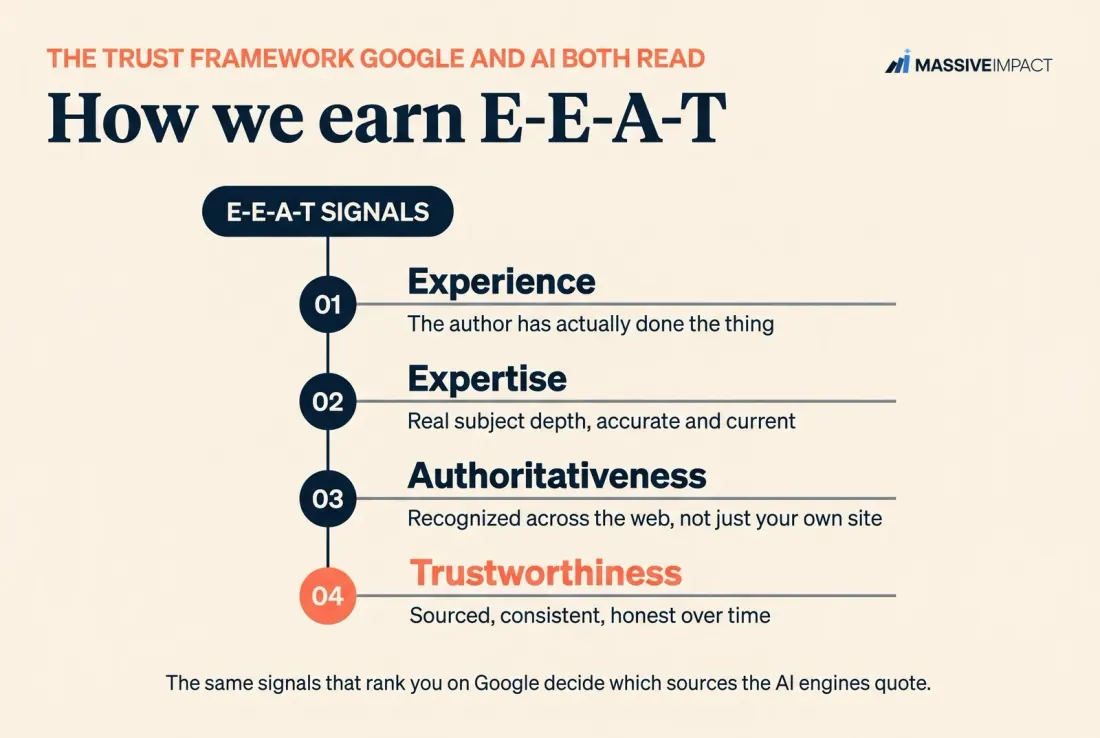
Own one subject in depth. Depth and interlinking out-rank domain size on that topic.Earn the trust signals both read. The same E-E-A-T that ranks you is what the AI engines quote.
Google ranks entities and topics now, not bare keywords. The 2024 Search documentation leak named a siteFocusScore and topic-level signals, so a site that owns one subject has the edge.
Google Search API leak, 2024 (documented by iPullRank)
Depth beats domain size. A focused specialist that covers one topic completely can out-rank far larger, more general sites on that topic.
Google Search Central, topical-authority guidance
One trust spine serves both engines. The E-E-A-T signals that decide your Google ranking are the same ones that decide which sources an AI answer names and cites.
Google Search Quality Rater Guidelines, 2025
What changed
What ranked in 2024 is not what gets found in 2026.
The playbook that won two years ago aimed at a link on a results page. The one that wins now aims at owning a topic and being the answer, on the page and inside the AI response both.
2024
Keyword-first pages and a race to pile up backlinks
2026+
Topical authority: own a subject in depth, and get cited for it
2024
Winning the number-one blue link on the results page
2026+
Being the answer the page and the AI both put first
2024
Chasing raw clicks to the website
2026+
Visibility inside the AI answers, where the decision now gets made
Why it matters now
Search stopped being ten blue links.
The results page increasingly answers the question itself, and an AI engine increasingly answers it before the person clicks anything. The job is no longer to win a link. It is to be the source that gets read, named, and cited.
68%of Google searches now end without a single click, up from about 60% in 2024. The results page answers them in place.SparkToro, zero-click search study
~48%of searches now surface an AI Overview above the links, sitting on top of nearly half of all queries.theStacc, 2026 AI Overview coverage
38%of the pages an AI Overview cites also rank in the classic top 10. Being the answer is a different contest than ranking a page.Search Engine Land, 2026
Where AI assistants send their referral trafficShare of website visits referred by AI assistants
ChatGPT92%
Every other AI assistant, combined8%
More than nine in ten of the visits AI assistants send to websites come from ChatGPT. Being read and cited there is where AI-search visibility starts.
One honesty note on the numbers above: reported AI-Overview coverage ranges widely, from about 18% to 60% of queries depending on who measured it and which searches they sampled. We show roughly half so no single figure reads as settled.
Straight answers
The questions small business owners ask about local SEO.
What is local SEO?
Getting found in the map pack and in "service plus city" searches, the exact places a local buyer looks when they're ready to hire. Local SEO is the work of getting a business found in the two places a nearby buyer looks when they're ready to hire: the Google map pack, and the organic results for searches like "bathtub refinishing Boston" or "escape room near me." It combines a Google Business Profile that's complete and consistent, pages built for each service in each town you serve, local citations, and the technical health that lets those pages rank at all.
How long does SEO take to work?
Months, and that's the point: it compounds while ads reset to zero, so early work keeps paying later. SEO takes months to show its full return, and that slowness is the feature, not the flaw. Unlike ads, which reset to zero the moment you pause the budget, the work you do early keeps paying long after it's done. A page that ranks this quarter is still ranking next year, and the authority it builds makes the next page rank faster. It compounds, which is exactly why lead cost falls over time.
What is the difference between SEO and Google Ads?
You rent ads and you own SEO. When the budget pauses, one stops and the other keeps producing. The core difference between SEO and Google Ads is ownership. Ads rent you a position at the top of the results and stop producing the day you stop paying, which makes them fast to switch on and fully dependent on spend. SEO builds an organic asset you own, slower to earn but it keeps producing when the budget pauses. We run both together so paid carries demand now while organic compounds underneath it and lowers your lead cost over time.
Is SEO worth it for a local service business?
Yes, because it's the one channel where lead cost falls over time instead of resetting every month. For a local service business, SEO is worth it because it's the only channel where the cost of a lead falls over time instead of resetting to zero every month. A paid-dependent refinishing business we worked with cut its cost per lead by 55% and grew organic traffic sixfold by building an owned engine underneath the ads. That's the shift: from renting every lead this month to owning an asset that keeps producing them.
What does SEO actually involve?
A site a crawler can read, a page for every service in every town you serve, and the technical health that lets those pages rank. SEO involves three layers of work. First, a site a crawler can actually read, which means the content and its structured data arrive server-rendered in the raw HTML, not assembled in the browser. Second, the content itself: a dedicated page for every service in every town you serve, written to match how buyers search. Third, technical health: schema markup, internal linking, Core Web Vitals speed, and clean local citations, so the pages you built are allowed to rank.
The proof
Off the paid treadmill, onto an engine they own.
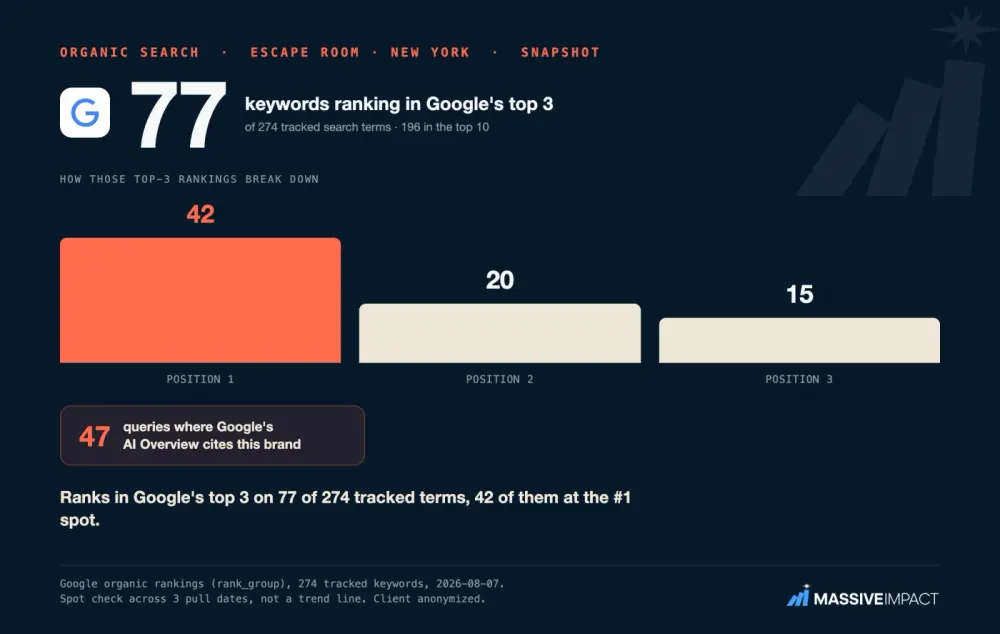
One rank card proves nothing on its own. Here is what the owned engine did for real clients, each read straight from Google Search Console, the leads tracker, or the practice's own dashboard, with its basis named. Bay State leads.
6X organicmore organic traffic, with cost per lead down 55%, off the paid treadmillBay State Refinishing
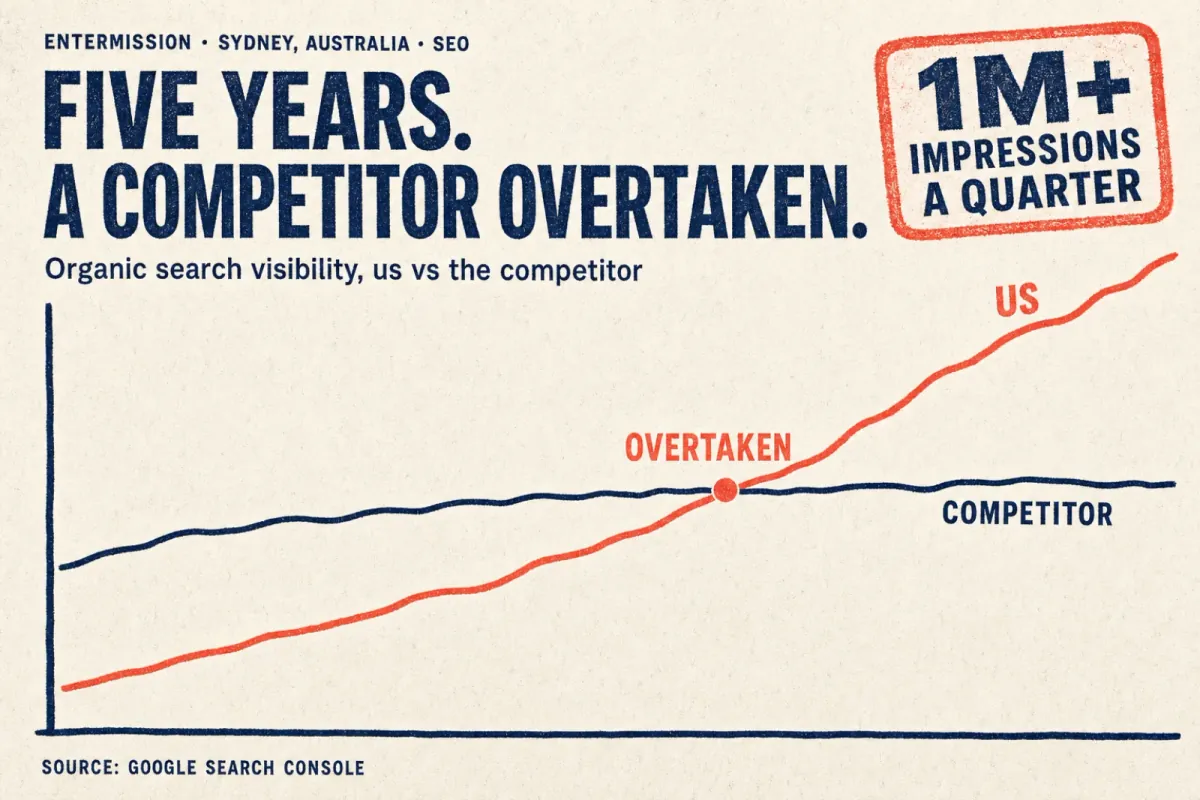
1M+organic impressions a quarter, and their direct competitor overtaken, during the years we ran itEntermission, ended 2025
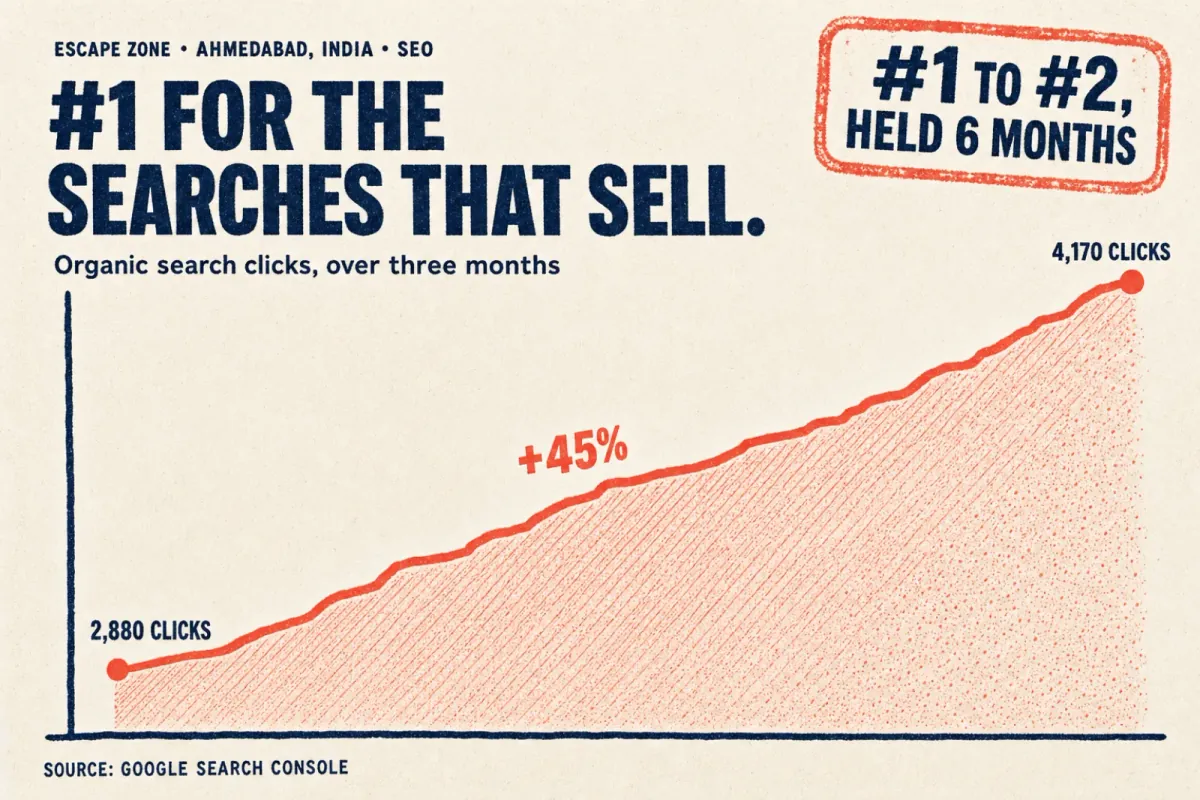
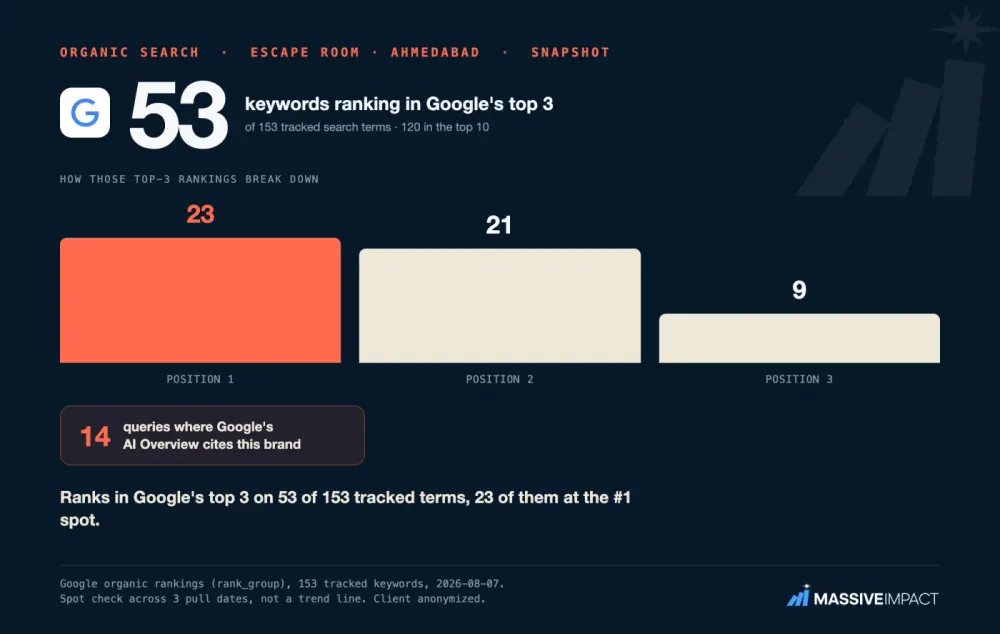
#1-2 heldcore city rankings held for about six straight months in a crowded marketEscape Zone
Bay State Refinishing: cost per lead down 55%, organic traffic up sixfold, up to about 200 leads a month. Read from the call and form leads tracker across roughly two years, ratios only.
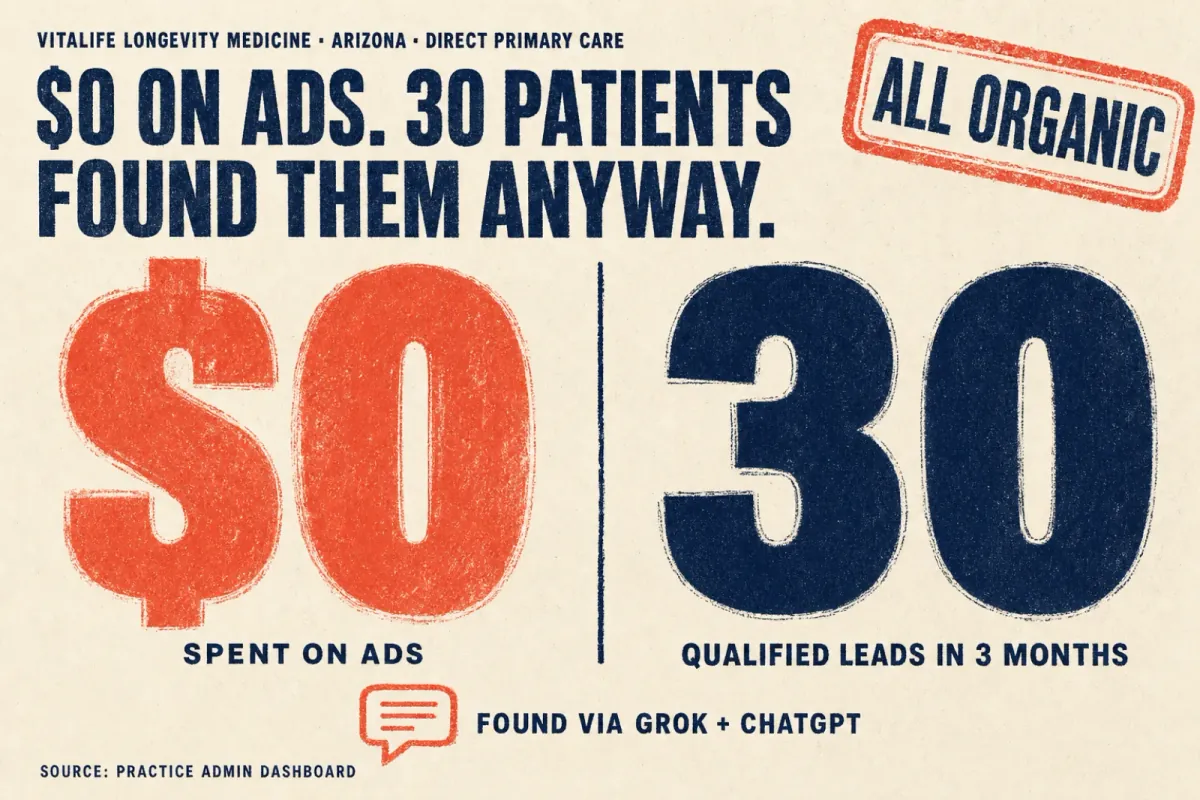
Escape Zone, Ahmedabad: held #1 to #2 on its core city term for about six straight months, with organic clicks up 45% over the festive run. Google Search Console.Entermission, Sydney: over about five years we grew their organic past 1 million impressions a quarter and overtook a direct competitor. A past result; the relationship ended in 2025.VitaLife: 30 qualified patients in three months on zero ad spend, several arriving through Grok and ChatGPT. Where SEO meets AI search. Practice admin dashboard.
Every figure is a durable line with its source named, never a single-month peak. Entermission is written in the past tense on purpose: it was a multi-year result while we ran it, and the relationship ended in 2025.
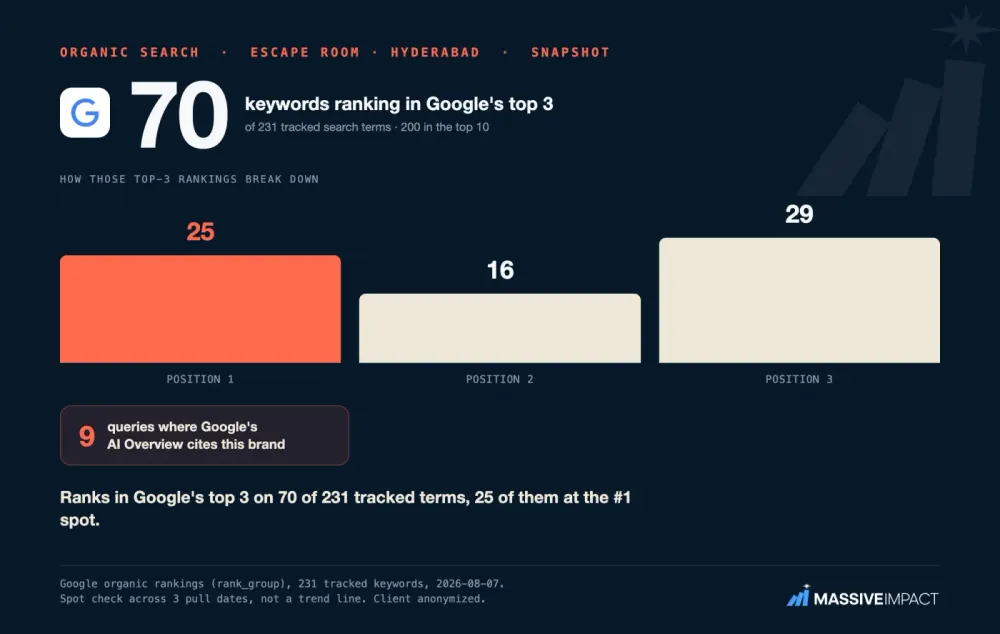
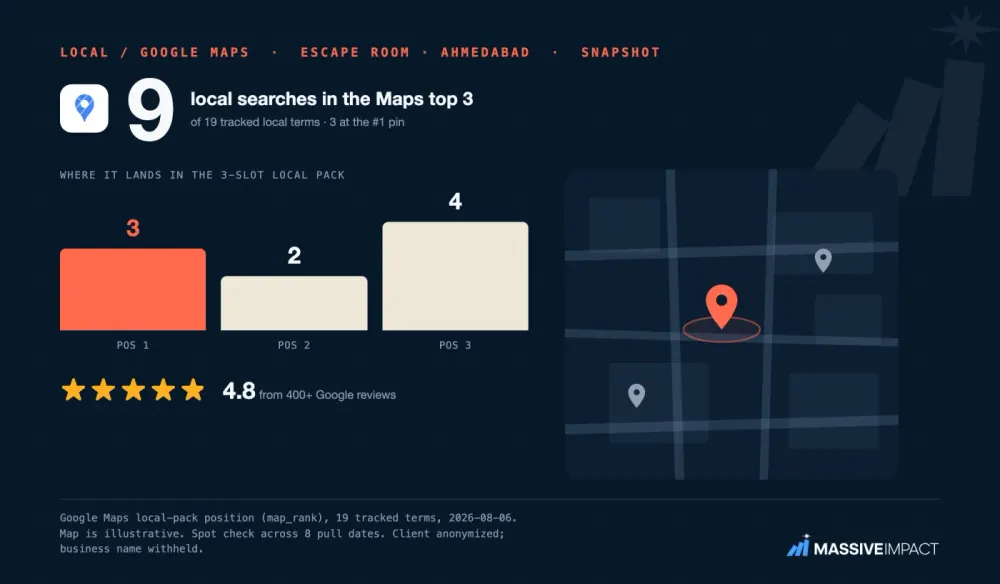
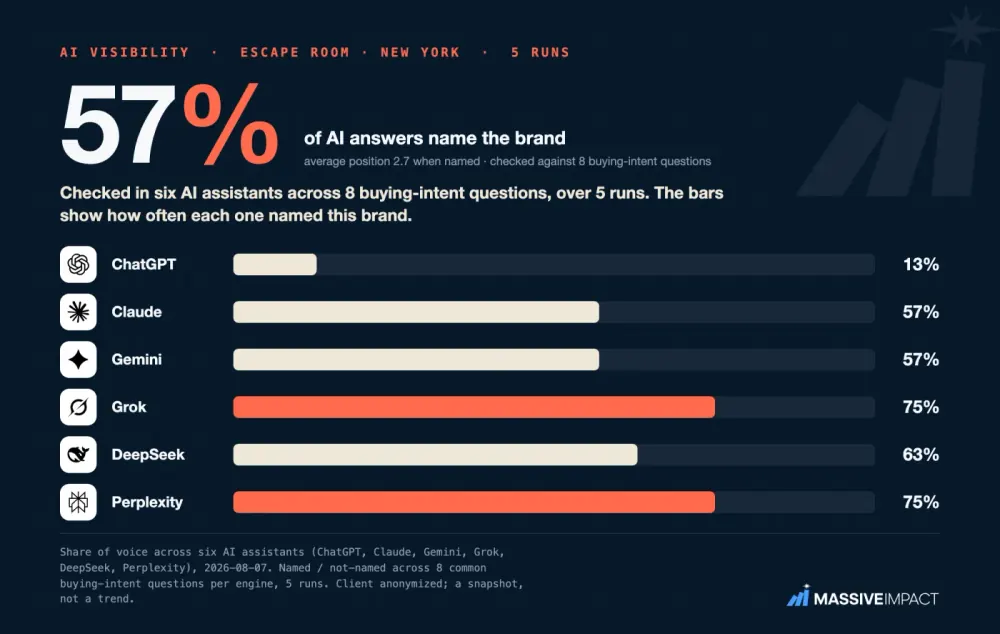
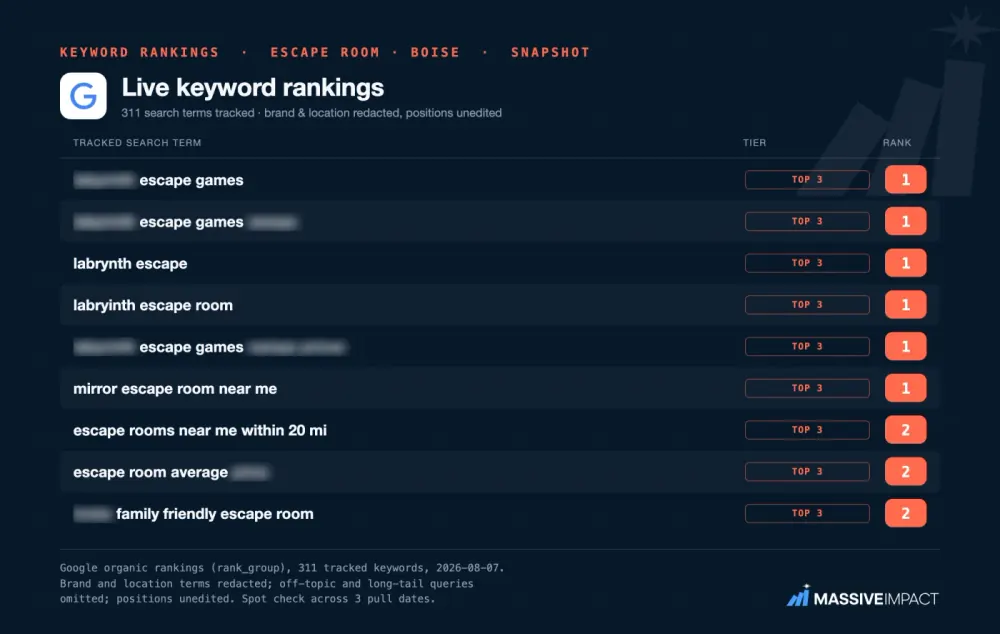
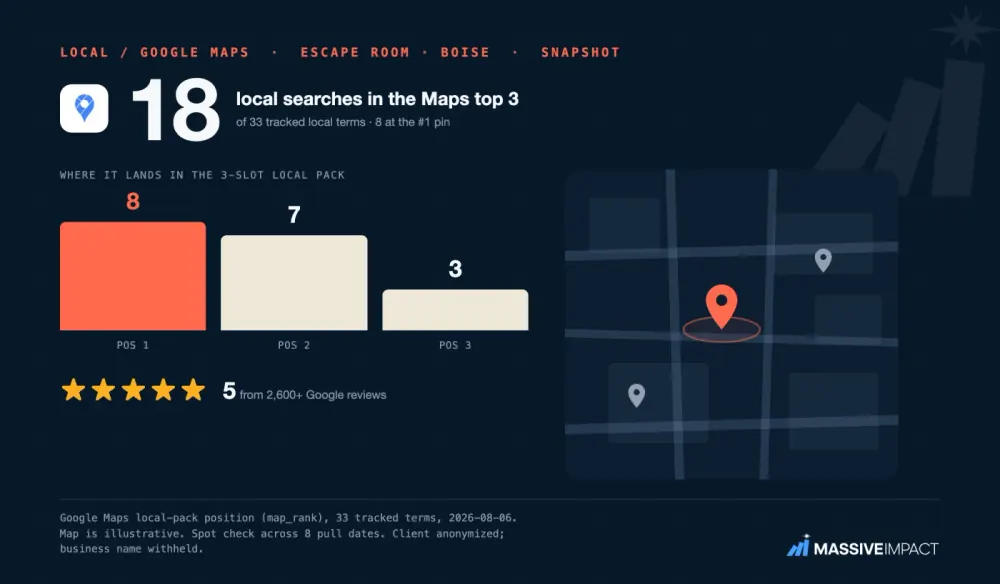
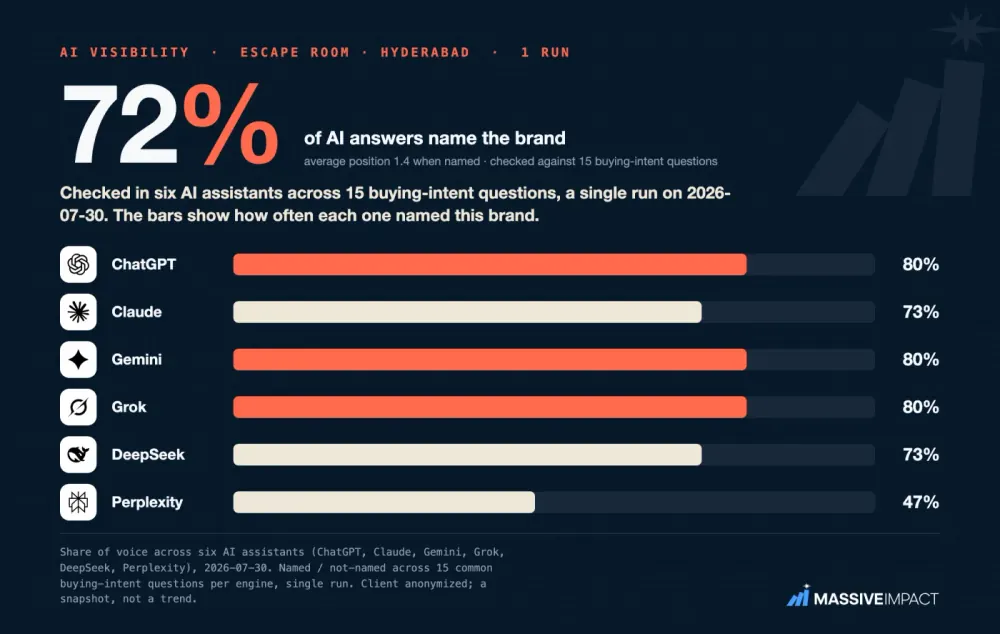
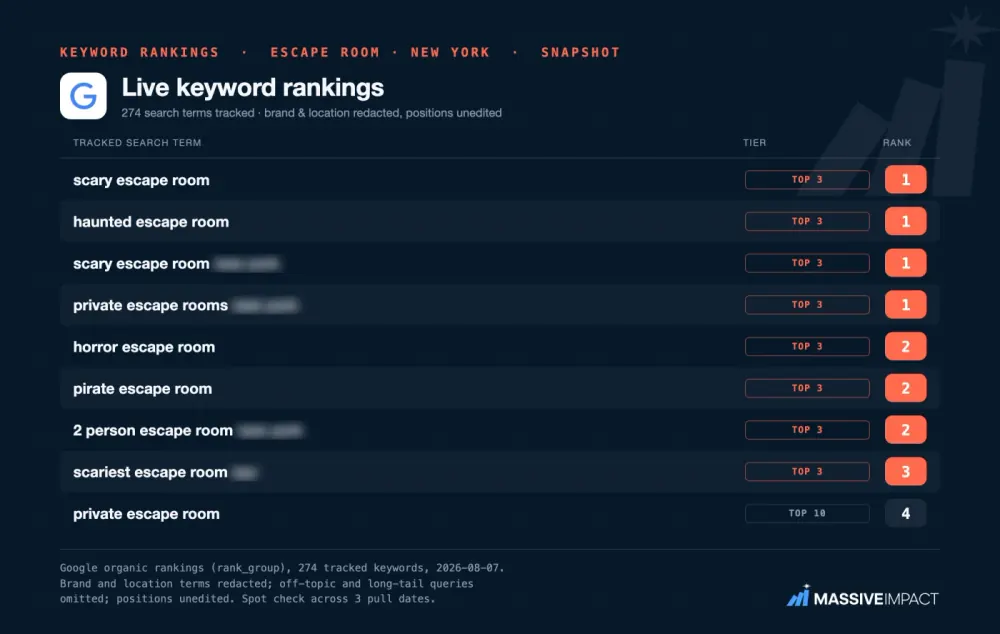
Where these businesses actually stand, market by market.
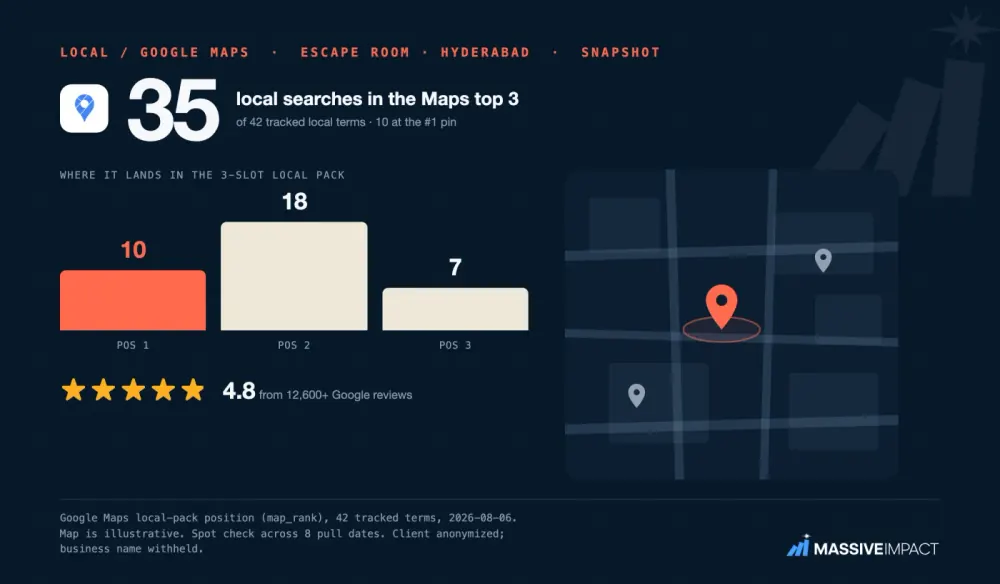
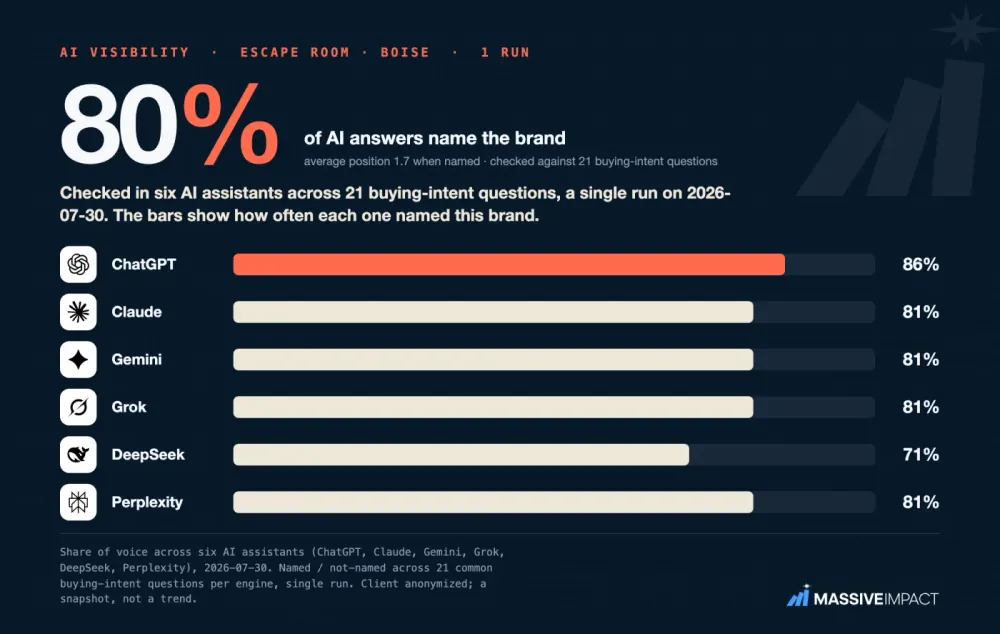
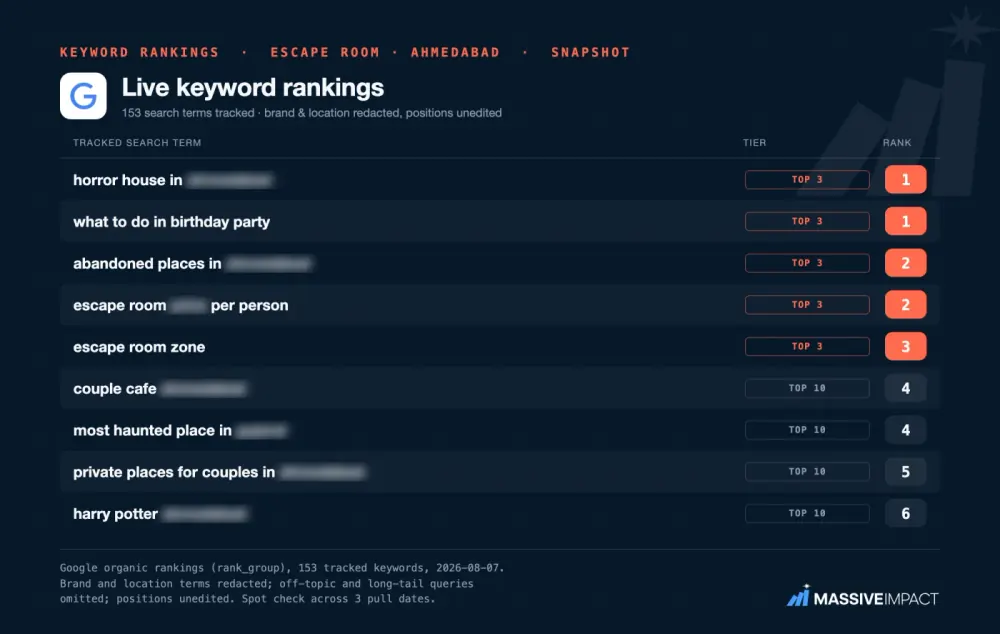
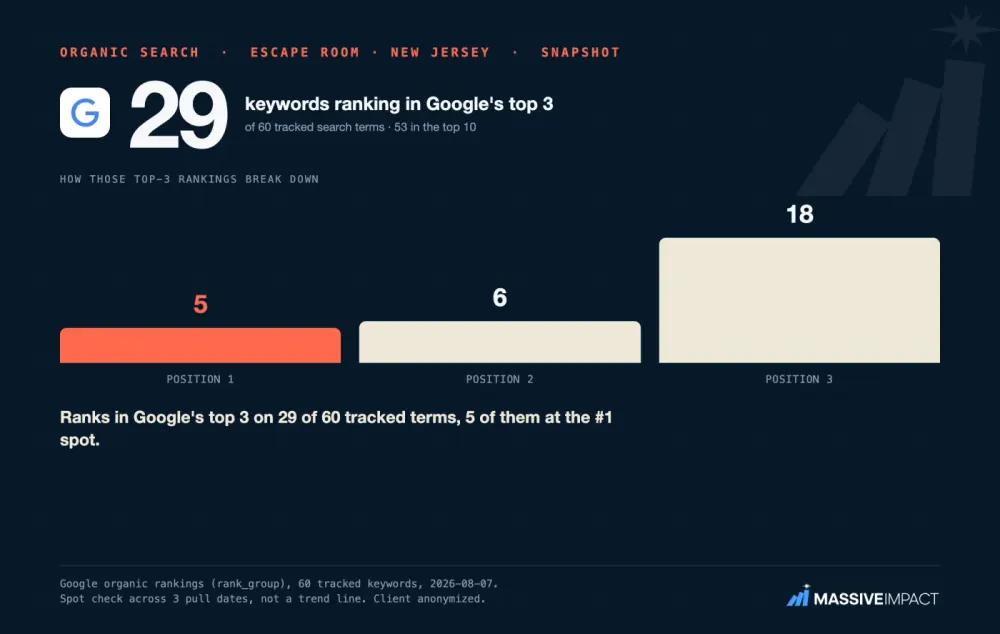
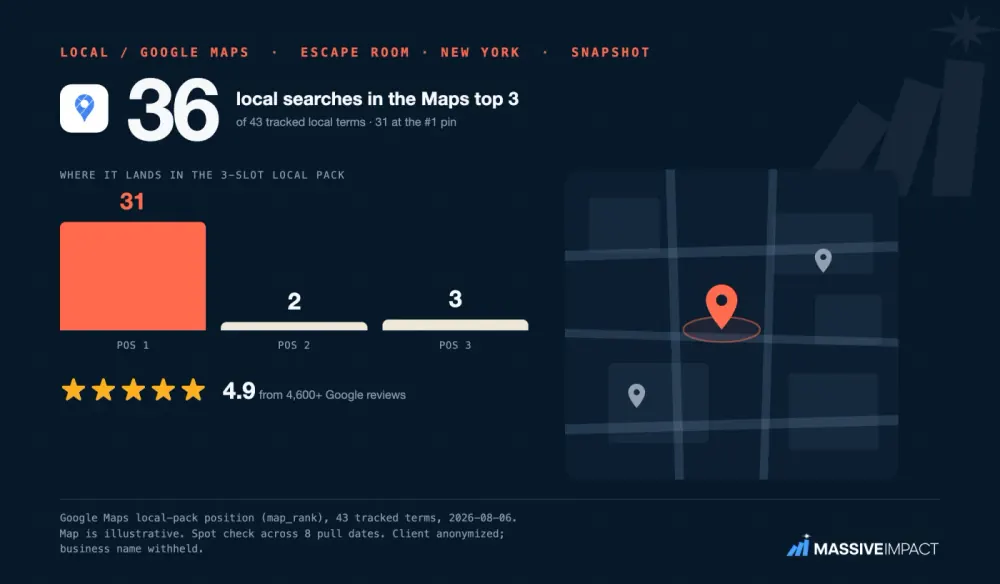
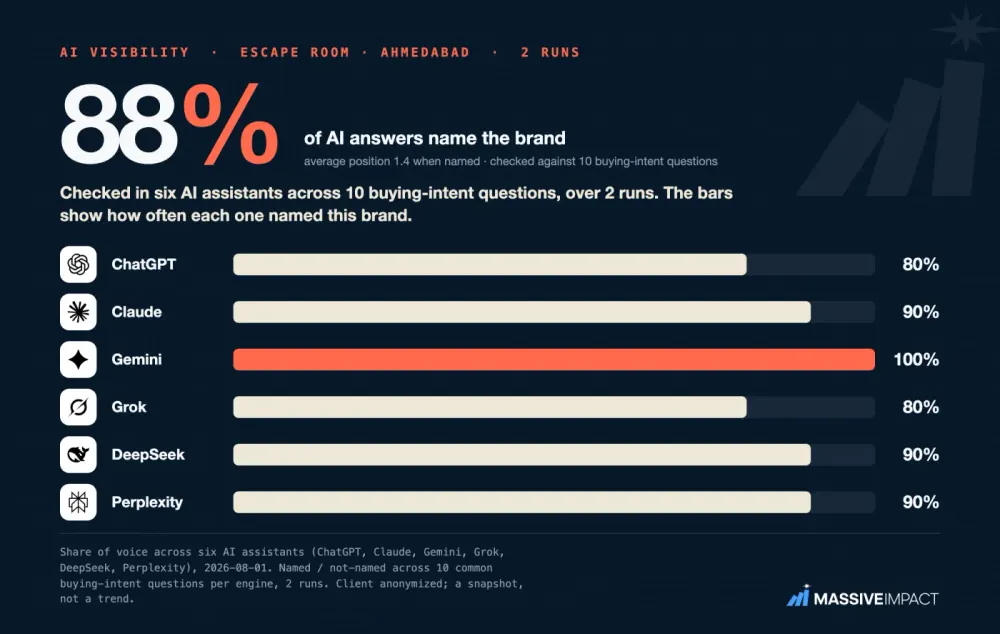
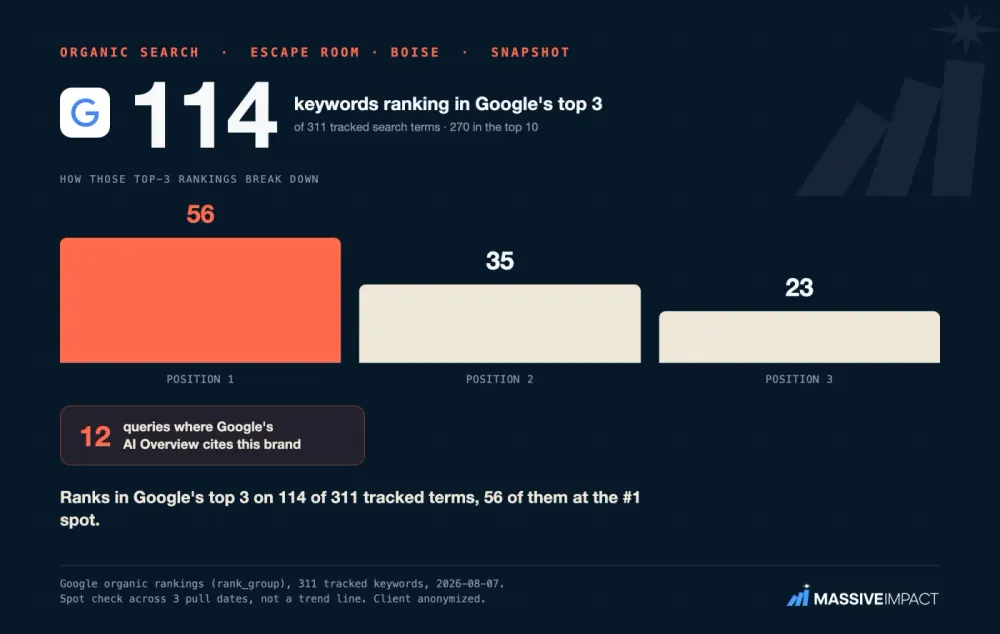
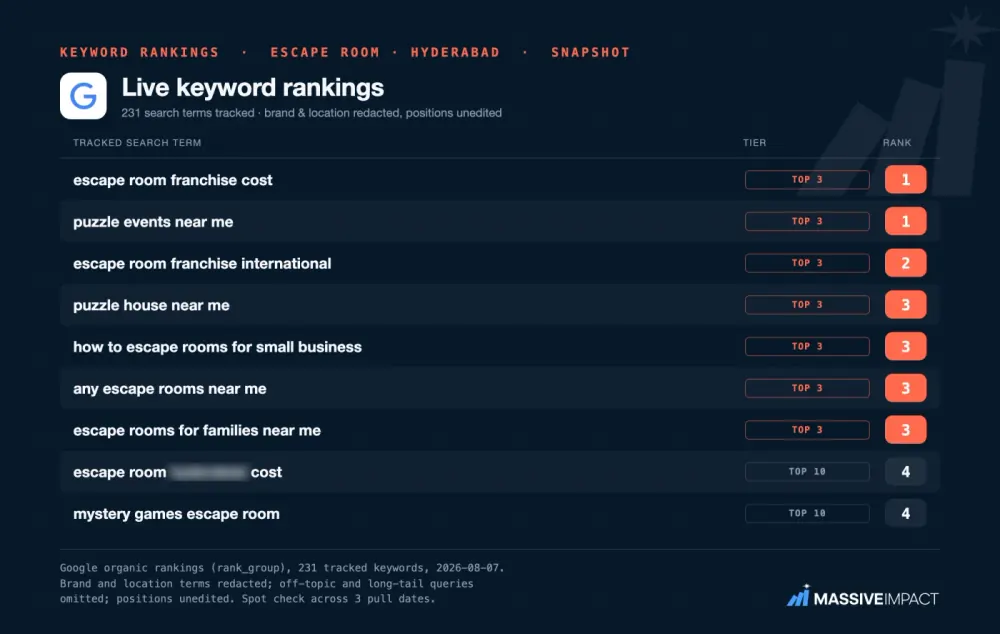
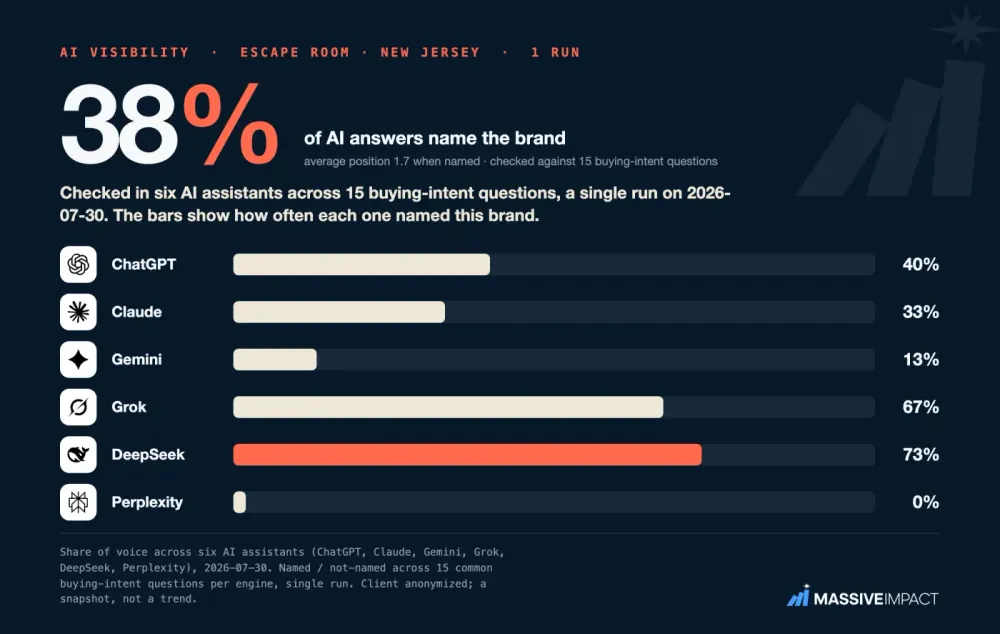
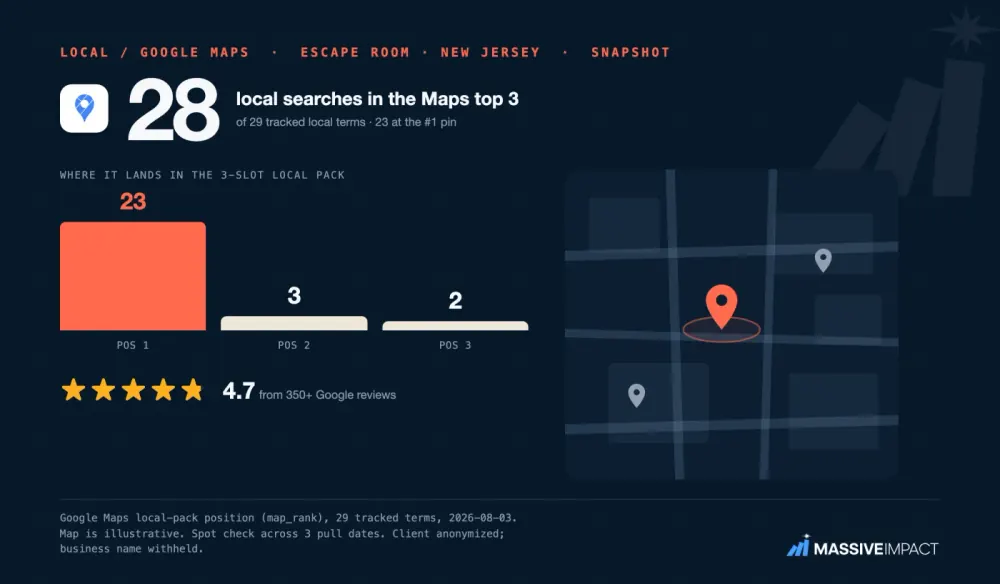
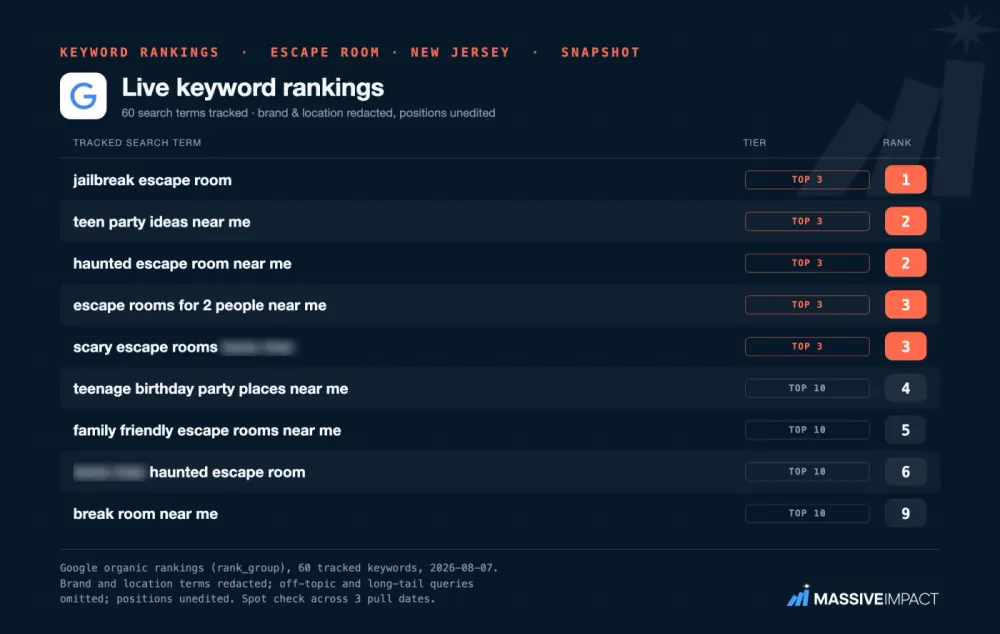
Each card is real ranking, map, and AI-visibility data pulled from the monthly tracking, then anonymized to the vertical and city. Organic position, the local pack, and how often the AI assistants name the business. Snapshots across a few pull dates, never a drawn-up trend line.
Every card is anonymized to the vertical and the city, never the business name. Businesses without enough tracked dates, or without map coverage, are left out rather than shown as a zero. The AI cards show share of voice across six assistants, including the ones that scored low, so nothing reads as a clean sweep.
The method
Four levers that build an owned engine.
It's slow work that keeps paying, which is the whole point.
01
A page for every service in every town
One dedicated page per service per town you serve, written to match how a local buyer actually searches.
Bay State Remodeling's fifteen service-area pages were built to rank "service plus town" across the luxury metro-west market.
02
Technical health under the hood
Schema markup, internal linking and Core Web Vitals speed, so the pages you built are allowed to rank.
Entermission's rebuild lifted site health to 98% and overtook the competitor that had been outranking them.
03
Own the map pack and the citations
A complete Google Business Profile and consistent citations, so you hold the local terms that convert.
An Ahmedabad room we ran held #1 to #2 for its core city term for about six straight months.
04
Server-render the pages a crawler reads
Content and structured data in the raw HTML, so search and AI crawlers can read the page at all.
Content assembled in the browser is invisible to search and AI crawlers alike. This is the shared foundation with AI search optimization.
The weight of it
Not one ranking. A monitored engine, held for years.
The reason we can show a standing rather than a screenshot is that we track it, every month, across the whole client base, and have done for years.
10 marketsclient markets we track every month for organic rankings, the map pack, and AI visibility
6,673organic keyword positions we monitor across those markets, pulled and re-checked on a schedule
2,552map and local-pack positions we track, because a local buyer looks at the map before the links
Every ranking, click, and citation on this page is read straight from Google Search Console, the Maps data, and real AI-assistant queries, tracked monthly and reported to you.
These counts are what we actively monitor across the client base, not a promise of any one result. Each client's own numbers are shown by name only where the data is durable and cleared to publish.
See it from them
The owners, on camera.
Not pull-quotes we typed up. Real clients, in their own words, on what changed after we took over the growth.
“
We went through 3 or 4 agencies before finalizing on Massive Impact.
Manuj ParekhEscape Zone, Ahmedabad, India
In their words
Owners who would not go back.
Bookings more than doubled
What I liked about Massive Impact is they understood escape rooms. Right now I am the top-rated escape room with 7,000 reviews in Google.
Jay LacchaniLock N Escape, Hyderabad, India
6 years, 1M+ impressions a quarter
Massive Impact has been our trusted partner for over six years. We overtook our competitor's rankings, and the impact on our organic traffic has been outstanding. Take the plunge.
Christal Ho, FounderEntermission, Sydney, Australia
Doubled the business
We've basically doubled what we were doing. The numbers speak for themselves. The website totally changed, we can see a clearer path of how a lead becomes an actual booking.
JorgeEscape Room Panama, Panama
Outranking bigger domains
You gave me a structure I could work with. What you did with the website, others did not have that level of architecture, and that is helping it climb a lot better than it otherwise would.
Andre BaranovMagnifico Tours, Tours and experiences
Chose MI over 3 other agencies
We went through 3 or 4 marketing agencies, but ended up finalizing on Massive Impact. You gave me vital information before we even had any contract in place, and that completely sold me.
Manuj ParekhEscape Zone, Ahmedabad, India
Practice what we preach
A crawler that can't read your pages can't rank them.
Every page you're reading is server-rendered with its structured data in the raw HTML, which is the same foundation your rankings sit on. And these are the crawlers we welcome on our own site, read straight from the site's configuration, so this list can't drift from what we actually ship.
GPTBotallowed
OAI-SearchBotallowed
ChatGPT-Userallowed
ClaudeBotallowed
Claude-SearchBotallowed
anthropic-aiallowed
PerplexityBotallowed
Perplexity-Userallowed
Google-Extendedallowed
Applebot-Extendedallowed
Where it fits
SEO is the organic half of Traffic. One engine of four.
SEO earns the rankings. It shares a foundation with AI search, runs next to paid, and needs a site worth landing on. It is one part of the Growth System, not a product on its own.
No, and anyone who does is guessing at rules Google won't publish. What we can do is build the site that earns it, do the work that compounds, and show you the trend as it moves.
How is this different from AI search optimization?
SEO ranks your pages in the results. AI search gets you named inside a generated answer. They share a foundation, server-rendered content a crawler can read, so we run them together rather than sell you two separate things.
Will SEO still work if I stop paying for ads?
That's the whole point. SEO is the asset that keeps producing when the ad budget pauses, which is why we build it: so you're never left with nothing the month you turn the ads off.
How long before I see results?
Months. It compounds, so the work done early keeps paying long after it's done. That's slower than ads to start, and it's why the lead cost keeps falling instead of resetting.
Tip the first domino
See where you rank, and where you could.
One call, and we'll look at the local terms you should own, where you sit today, and what an engine you own would take.


 Jay Lacchani
 Christal Ho, Founder
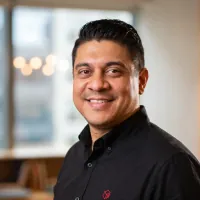 Jorge
Jorge Andre Baranov
 Manuj Parekh