

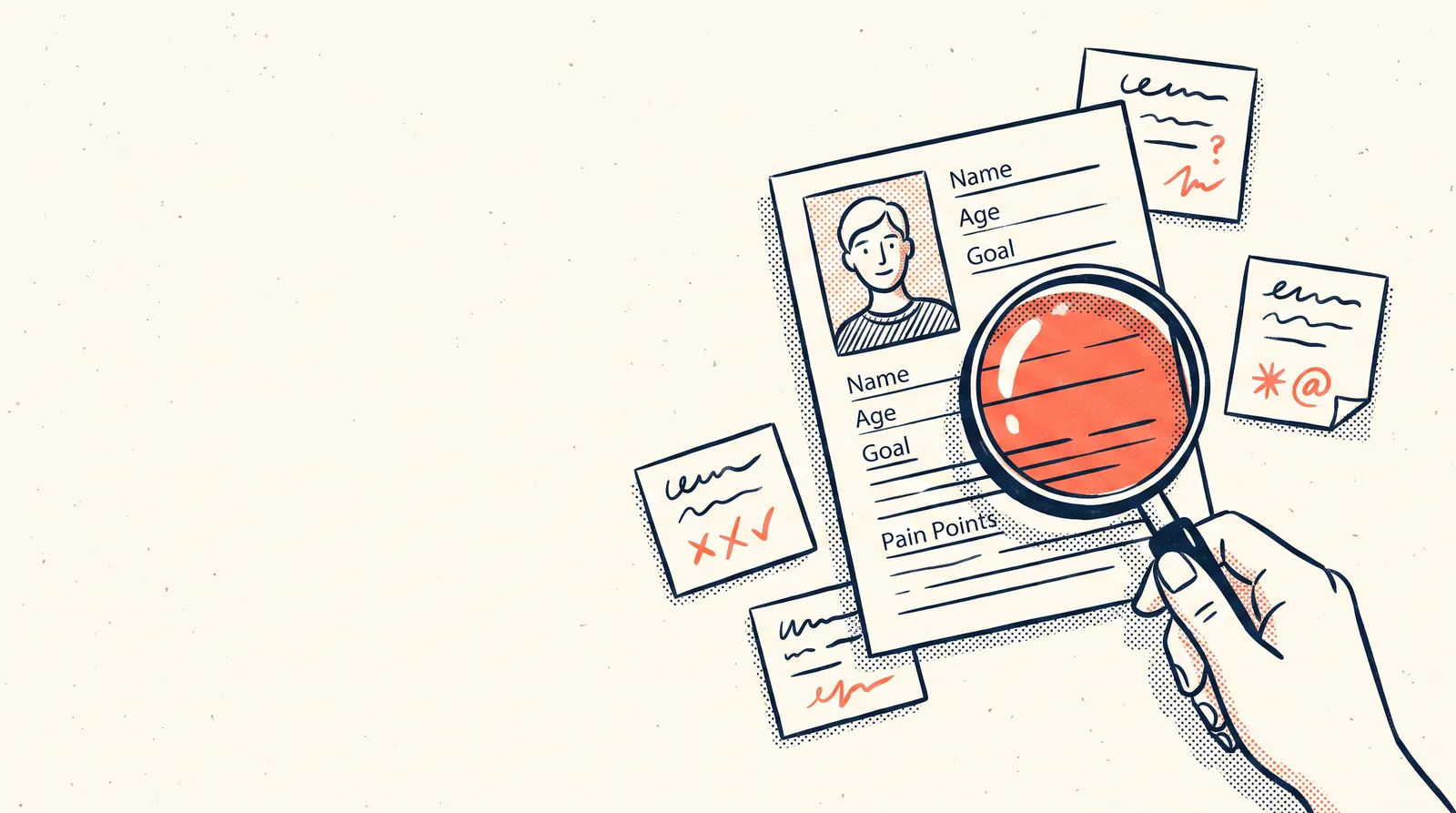

Know your buyer better than they know themselves.
You cannot market what you do not understand
Before any design or headline, you study the business, and above all the buyer. Not their age and postcode. Their real fears and wants, in their own words.
Answer these ten honestly and your whole website writes itself: the headline, the offers, the proof, the follow-up. Answer them vaguely and you will be rewriting the homepage every three months without ever knowing why it is not working.
The difference between a site that converts and one that does not is almost never the design. It is whether the person who wrote it knew what the reader was afraid of.
Where the real answers come from
The worst version of this exercise is done from memory, alone, in one sitting. You will write what you wish were true.
Four sources, in order of how much they are worth.
Your own sales calls. The last ten. What did they ask before they asked the price? What did they say when they hesitated? The objection you have answered a hundred times is the one your homepage should answer before it is raised.
Your reviews, and your competitors'. Your five-star reviews tell you what you actually deliver, which is often not what you think you sell. Your competitors' one and two-star reviews are the most valuable free research available: they are a list of what your market is afraid of, written by people it happened to.
Your inbox. Search your email for the questions people ask before booking. Copy the phrasing exactly. People do not search or speak in your industry's vocabulary.
Search and AI suggestions. Type your service into Google and read the autocomplete and the "people also ask" box. Ask ChatGPT what someone worries about before hiring your kind of business. Both are aggregated evidence of what people actually wonder.
If an answer below is a guess, mark it as a guess and go and check. A guessed answer that reaches your homepage becomes an expensive guess.
The 10 questions
Write a real sentence for each. No jargon. Use the words your customer would use.
- Their single biggest fear about this:
- Their single biggest want:
- The exact words they use for the problem:
- The one promise you can own that a competitor cannot copy:
- What they have already tried that did not work:
- Why they might not trust you:
- The 5-second test: who is your site for, and why you?
- What does the unaware person search for or scroll past?
- What does the ready-to-buy person need to see to act?
- The one number or proof that makes them believe you:
What each answer becomes
Every answer has a job on the site. This is the part most people skip, and it is why the worksheet usually ends up in a drawer.
| Answer | Where it goes |
|---|---|
| 1, their fear | The objection you handle before they raise it, near the ask |
| 2, their want | Your headline |
| 3, their words | The whole site's vocabulary, replacing yours |
| 4, your promise | Your positioning line, the one that appears everywhere |
| 5, what failed | The "why this is different" section, written without naming names |
| 6, the distrust | What your proof has to answer, and where it sits |
| 7, the 5-second test | The first line above the fold |
| 8, the unaware | Your blog, your guides, the pages that catch search and AI |
| 9, the ready buyer | Your service page and the booking flow |
| 10, the proof | The number that sits next to every call to action |
Two of these deserve special attention.
Questions 8 and 9 are two different pages. The unaware person and the ready buyer need different things and should not land on the same page. A site with only the ready-buyer page is competing for the small slice of the market that is buying today. A site with only the unaware page gets traffic and no bookings.
Question 4 is the hardest, and the most valuable. "Great service" is not a promise you can own, because your competitor claims it too. A promise you can own is one that would be expensive or embarrassing for them to copy. If you cannot think of one, that is the strategic problem, and the website is not where you solve it.
Two tests before you use these answers
The stranger test. Show your answer to question 7 to someone outside your industry. If they cannot repeat back who the site is for, it is not clear yet.
The competitor test. Take your answer to question 4, and imagine it on your closest competitor's homepage. If it would sit there comfortably and nobody would notice, it is not a promise, it is a platitude. Go again.
How to use it
Every answer becomes a piece of your site. Fill it in once, properly, and the guesswork is gone: the headline stops being a matter of taste and becomes a matter of question 2.
If a page on your site does not trace back to one of these ten answers, it does not need to exist. That test alone usually removes a third of the pages on a site, and the site gets better for it.
Redo this once a year, or any time you notice you are winning a different kind of customer than you used to. The answers move, and a site built on last year's answers is the most common reason a site that used to work stops working.
The rest of the guide is yours, free.
Enter your email to keep reading and get the PDF to keep.
No spam. One email unlocks every Massive Impact resource.
“How do you market something when you don't know what that product is? You need to understand the product, and that is what I liked about Massive Impact.”
The service behind this
