Instagram recently rolled out something that didn’t create much noise, but it probably should have. They’re introducing a paid subscription where users can choose to stop seeing ads entirely. If you pay, you scroll Instagram without interruptions, and your data is no longer used for advertising. It’s similar to what YouTube Premium or Spotify Premium already do.
Here’s the official update if you want to read Meta’s version of it:
https://help.instagram.com/923021729404927/?helpref=uf_share
On the surface, this sounds like a win for users. Cleaner feed. No interruptions. No sponsored posts breaking your flow. But if you look at this from an advertiser’s perspective, the implications are much bigger — and honestly, a bit uncomfortable.
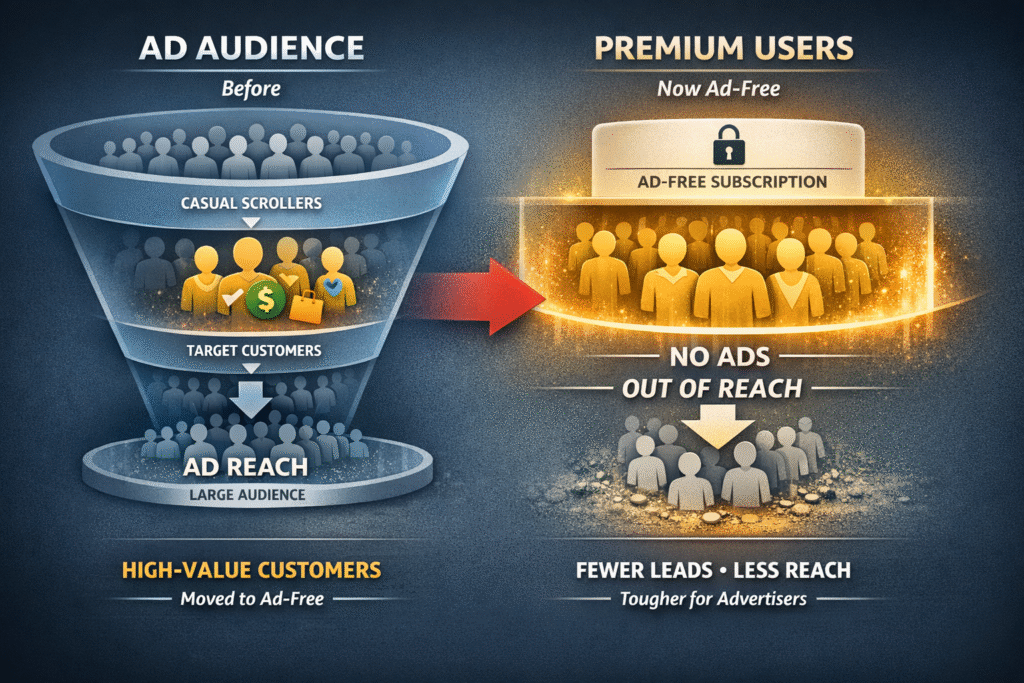
The biggest issue is who is likely to pay for this. It’s not the casual scrollers. It’s the people with higher income, higher intent, and higher purchasing power. In other words, the exact audience most brands want to reach. Once these users opt into the ad-free experience, advertisers simply lose access to them. Ads won’t be shown. Data won’t be used. That audience effectively disappears from paid campaigns.
This means ads will be shown to fewer people, and more importantly, fewer high-quality people. That leads to fewer opportunities for discovery, fewer impulse purchases, and tougher performance for brands that rely heavily on Instagram and Facebook ads. It’s no surprise that a lot of advertisers are already nervous about this update.
We’ve seen this play out before. YouTube Premium has grown significantly over time, with tens of millions of users choosing to pay instead of watching ads. If even a fraction of Instagram users follow the same behavior, it changes the economics of advertising on the platform. Now imagine a scenario where your best customers are the ones you can’t reach through ads anymore. That’s not a small tweak — that’s a fundamental shift.
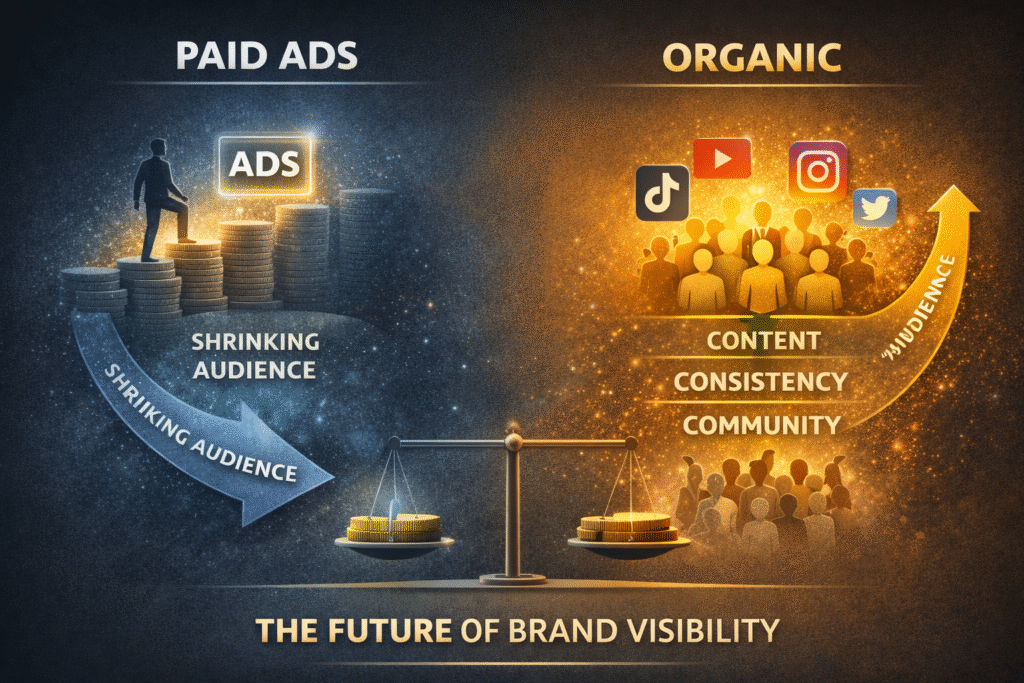
For brands that depend almost entirely on paid ads, this is a real problem. If nothing changes and they continue to rely only on performance campaigns, they’ll be competing harder for a smaller pool of users. Costs go up, efficiency goes down, and eventually some brands will lose business — not because their product is bad, but because their distribution strategy didn’t evolve.
This is where organic starts to matter again. Social platforms are slowly becoming the new “organic layer” of the internet. If ads can be switched off by your best audience, the only way to stay visible is to actually show up in feeds through content, community, and consistency. Brands that build organic presence, trust, and attention will still be seen. Brands that don’t will struggle.
Ads aren’t going away, but they’re no longer enough on their own. The future looks like paid plus organic, not paid instead of organic. Ads will amplify what’s already working, not carry the entire business on their back.
For brands, the shift needs to start now. Building organic content systems, capturing first-party data like emails or WhatsApp, and reducing dependency on a single platform are no longer optional. They’re survival moves.
If this update made you pause and rethink your marketing approach, that’s a good thing. This shift won’t happen overnight, but it will happen. And the brands that adapt early will be the ones that stay ahead.
If you want help navigating this change — building organic systems, reducing ad dependency, or future-proofing your marketing — you can reach out to us. We’re already helping brands prepare for what’s coming next.