Why the “dead channel” is actually your biggest untapped opportunity — and how local businesses can win while everyone else burns out.
Everyone keeps saying cold email is dead.
The marketing gurus. The social media influencers. That one guy at the networking event who swears LinkedIn DMs are “the only thing that works now.”
Here’s what they’re missing:
- 4.73 billion people will use email in 2026
- Gen Z checks their inbox multiple times a day (42% say it’s their favorite work communication tool)
- Email marketing delivers $36–$42 ROI for every $1 spent
- Local service businesses face less inbox competition than saturated SaaS markets
Cold email isn’t dead. It’s just being done wrong by almost everyone.
And that’s exactly why it’s a goldmine for small business owners and local service providers willing to do it differently.
The Cold Email Strategy That Works in 2026
The opportunity for local and service businesses: your prospects aren’t drowning in 50 cold emails a day like enterprise buyers. Their inboxes are quieter. Your relevance can actually cut through.
The playbook:
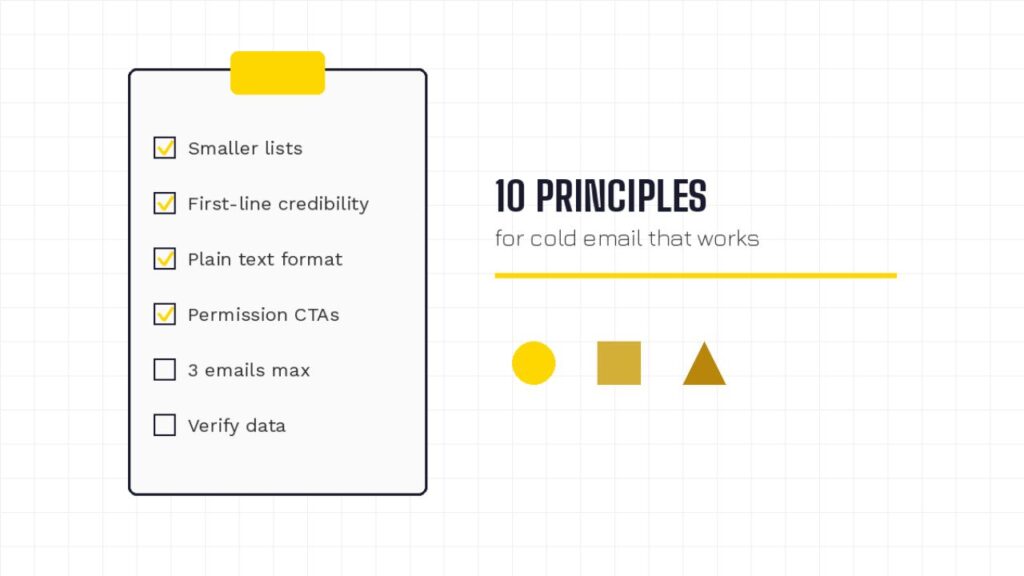
- Hyper-local targeting beats mass lists every time
- First-line credibility (not “Hope this email finds you well”)
- Plain-text emails that look human, not templated
- Permission-based CTAs that lower friction
- 2–3 email sequences max — after that, you’re noise
- Verified data protects your sender reputation
- Multichannel outreach (email + LinkedIn) increases visibility without spamminess
Top performers are seeing 10%+ reply rates while everyone else hovers at 1–5%. The difference isn’t luck. It’s approach.
The myth vs. the math: Do cold emails still work?
Let’s kill the “email is dead” narrative with actual numbers.
In 2025, there were 4.5 billion email users worldwide. By 2027, that number hits 4.85 billion. That’s more than half the planet checking their inbox — many of them multiple times per day.
Here’s what the cold email statistics actually show:
- Average cold email response rate: 1–5%
- Top performers: 10–25% reply rates
- Emails with personalized subject lines: 30.5% higher response rates
- Emails under 125 words: ~50% reply rates
- First follow-up boost: Up to 49% more replies
The problem isn’t the channel. It’s that 95% of cold emails are irrelevant, robotic, and sent to the wrong people at the wrong time.
Meanwhile, local service businesses have a massive advantage most don’t realize: their prospects aren’t getting hammered by 30 SDRs a day like a VP of Engineering at a Series B startup.
Your plumber’s inbox isn’t buried. Your local restaurant owner isn’t dodging 50 “quick question” subject lines every morning.
The noise is lower. The opportunity is higher.
Why Gen Z email habits change everything (yes, really)
Here’s something most marketers completely miss: Gen Z isn’t abandoning email. They’re embracing it.
Recent research on Gen Z and email shows:
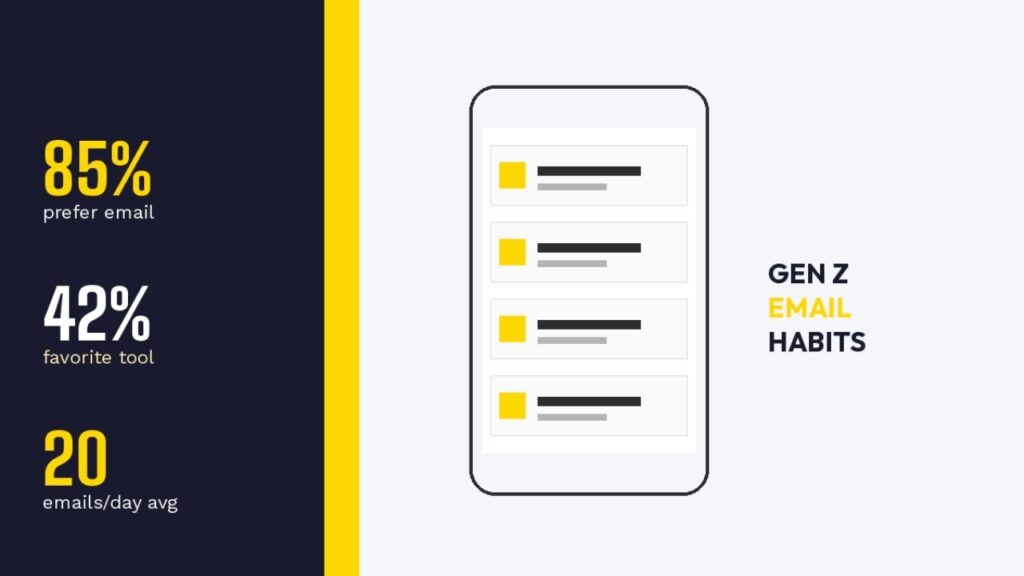
- 85% of Gen Z prefers email over other communication channels
- 42% of Gen Z workers say email is their favorite communication tool at work
- 58% check their inbox multiple times a day
- The average Gen Zer only receives about 20 emails a day — far less competition than older demographics
This isn’t your parents’ email fatigue. Gen Z treats email as a professional space. They take it seriously. They read what’s relevant and delete what isn’t — fast.
For local businesses targeting younger decision-makers, owners, and managers, this is massive. Your cold email outreach might actually get read if it’s not immediately obvious spam.
The bar isn’t high. It’s just rarely cleared.
The broken playbook (and why it keeps failing)
Before we get to what works, let’s be honest about what doesn’t.
The old B2B cold email playbook looks like this:
- Blast 1,000+ emails per week
- Use templates with [FIRST NAME] merge fields
- Let AI “personalize” by scraping LinkedIn headlines
- Stack 7–10 follow-ups (“Just checking in!”)
- Ignore bounce rates until your domain is torched
This approach optimizes for activity, not outcomes. It creates the exact inbox experience everyone hates: generic messages, sent too often, to people who never asked to hear from you.
The results?
- Cold email open rates plummet
- Reply rates under 2%
- Email deliverability tanks after a few weeks
- Your domain ends up on spam lists
- Prospects associate your brand with annoyance
And here’s the brutal truth: AI-generated emails are making this worse, not better. When everyone’s using the same tools to “personalize” at scale, every email starts sounding identical. The sameness kills trust before you even get to your offer.
The Goldmine Playbook: 10 cold email tips for local business lead generation
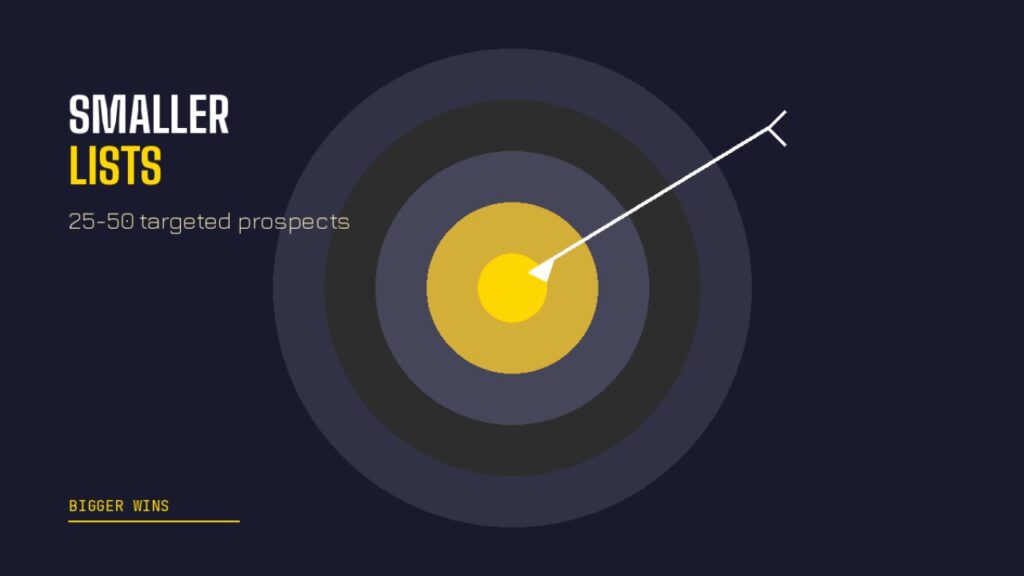
1) Smaller lists, bigger wins
If your list is “big,” your message is probably generic.
The goldmine approach: build tight lists of 25–50 prospects who share a specific profile. Same industry. Same role. Same local market. Same trigger.
For local service businesses, this might mean:
- Restaurants that just got health code violations (if you’re a cleaning service)
- New retail storefronts within 10 miles (if you’re a signage company)
- Businesses that recently posted job listings for marketing roles (if you’re an agency)
When you can explain why this person, at this company, right now in one sentence — you’re ready to email.
If you can’t, don’t.
2) First line = credibility (not small talk)
Your first line decides everything. It’s the difference between delete and read.
Most cold email examples waste it:
“Hope this email finds you well!”
“I came across your business and thought I’d reach out.”
“I’m [Name] from [Company] and we help businesses like yours…”
All of that says: I’m a stranger who doesn’t know you and this is a template.
Instead, lead with credibility:
- A relevant outcome: “We helped 3 restaurants in [City] cut their monthly cleaning costs by 22%.”
- A credible action: “I’m researching how home service businesses in [Neighborhood] handle their lead flow.”
- A credible constraint: “I only reached out to 14 HVAC companies in [County] — yours stood out because of your Google review volume.”
The goal isn’t to impress. It’s to answer the unspoken question: Why should I keep reading?
3) Run the “nuisance test” before you send
Before every cold email campaign, ask yourself:
- Would I be annoyed to receive this?
- If I got this 10 times this week, would I trust the sender less?
- Does this ask for attention before earning it?
- Is the message specific enough that a stranger could tell who it’s for?
- If they reply “not now,” do I have a respectful next step?
If you fail the nuisance test, your email isn’t “bold outreach.” It’s spam with good intentions.
4) Research more, write less
The best cold emails don’t come from better writing. They come from better research.
Good sources for local businesses:
- Google reviews of your prospect (what are customers complaining about?)
- Their website (new hires? New locations? Awards?)
- Local news (did they just get featured? Open a new branch?)
- Industry trends (what’s affecting businesses like theirs right now?)
- Job postings (what roles are they hiring for? That signals priorities)
Then tie your research to a single hypothesis:
“Saw you’re hiring a marketing coordinator — usually that’s when lead tracking becomes a pain point. That’s exactly what we solve.”
One insight. One connection. One reason to reply.
5) Plain text wins
Stop making your sales emails look like newsletters.
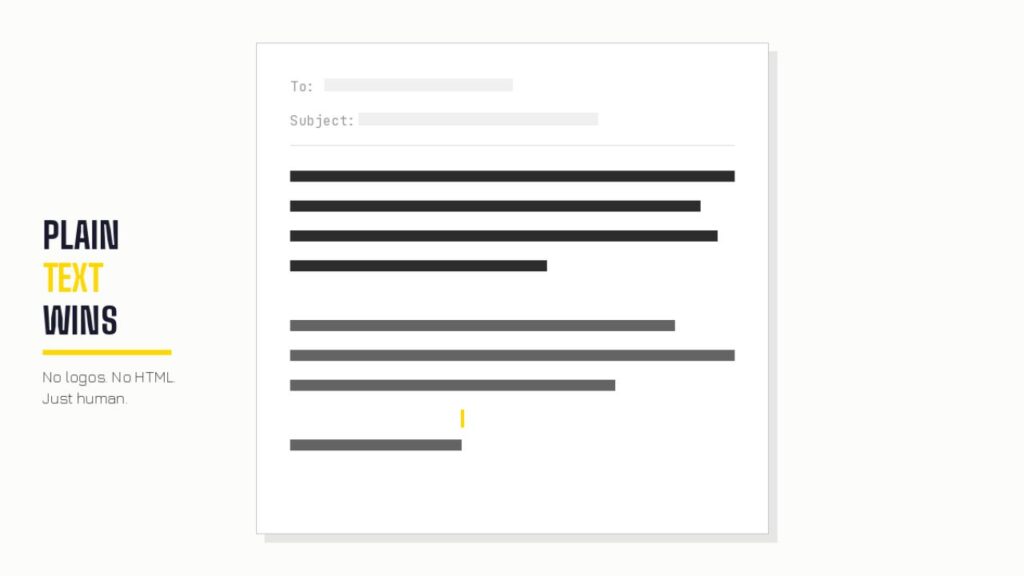
No logos. No fancy HTML. No images. No multiple links.
Plain text emails look human. They read fast. They feel like a real person wrote them, not a marketing automation tool.
Structure that works for how to write a cold email:
- First line: Credibility or relevance
- Second line: Your hypothesis or observation
- Third line: The value you offer
- Fourth line: A soft CTA
Keep it under 100 words when possible. Short sentences. One idea per paragraph.
If your email looks like it belongs in a design portfolio, it belongs in spam.
6) Permission over assumption
Cold email outreach gets calmer when you stop assuming you’ve earned their time.
Instead of dropping links and asks in email one, try permission:
“Would it be useful if I sent a 60-second walkthrough of what I noticed about your current setup?”
“Can I share how 2 other [industry] businesses in [City] handled this?”
“If I’m off base, just say so — no follow-ups, I promise.”
You’re not lowering ambition. You’re lowering friction. Permission-based CTAs feel respectful. And respect gets replies.
7) Verify your data or lose before you start
Nothing kills credibility faster than:
- Emailing the wrong person
- Getting their company name wrong
- Bouncing repeatedly off bad addresses
In 2026, inbox providers are smarter than ever. High bounce rates tank your sender reputation. And once your domain is flagged, good luck reaching anyone.
Verify every email before you send. Clean your list. Treat data hygiene like brand management — because it is. Good email deliverability starts with verified data.
8) The 3-email maximum
Here’s what the cold email statistics show:
- First follow-up: Up to 49% more replies
- Second follow-up: Diminishing returns (~3% boost)
- Third+ follow-up: Negative returns — reply rates drop, spam complaints rise
The best outcomes cluster around 2–3 email sequences total. After that, you’re not being persistent. You’re being annoying.
Each follow-up email should add new value or information. “Just checking in” is not value. “Here’s a benchmark I thought you’d find useful” is.
If they don’t reply after 3, let it go. Move on. Protect your reputation for the next campaign.
9) Multichannel beats single-channel
The easiest “cold” email is the one that isn’t truly cold.
Before you email, consider:
- Sending a LinkedIn connection request with a genuine note
- Engaging with their content (if they post)
- Referencing a mutual connection or shared context
Then your prospecting email can say:
“I sent a LinkedIn connect yesterday — emailing in case you’re not active there.”
This creates legitimate context without faking familiarity. You’re visible in two places without being spammy in either.
10) Avoid the gimmicks
Trends spread fast. What “works” today becomes noise tomorrow.
Here’s what to avoid in your cold email subject lines and copy:
- Fake “Re:” or “Fwd:” subject lines — pretends there’s a prior thread
- The FWD chain format — stages a fake internal conversation
- Clickbait subjects (“Quick question”, “Thoughts?”) — optimized for opens, not trust
- Breakup emails (“Should I close your file?”) — manufactured guilt
- Fake urgency (“Before Friday”, “Last chance”) — no one believes you
- Calendar ambush — dropping a meeting link in email #1 skips consent
- Fake name-drops — “John suggested I reach out” when John didn’t
- “Personalized” video at scale — templated Looms aren’t personal
If you need a trick to get attention, you haven’t earned attention.
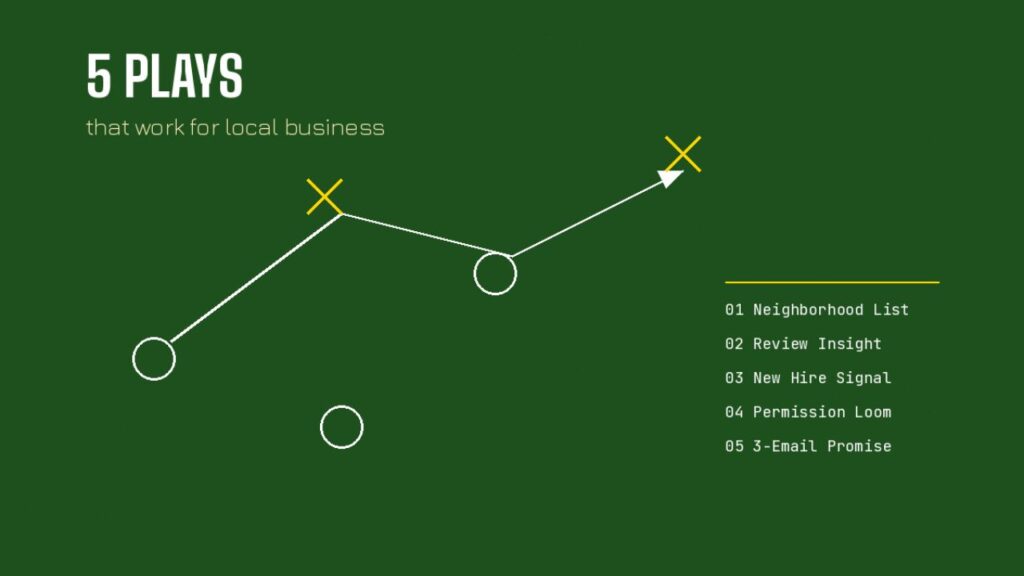
5 cold email templates and plays that work for local businesses
1) The “Neighborhood List” play
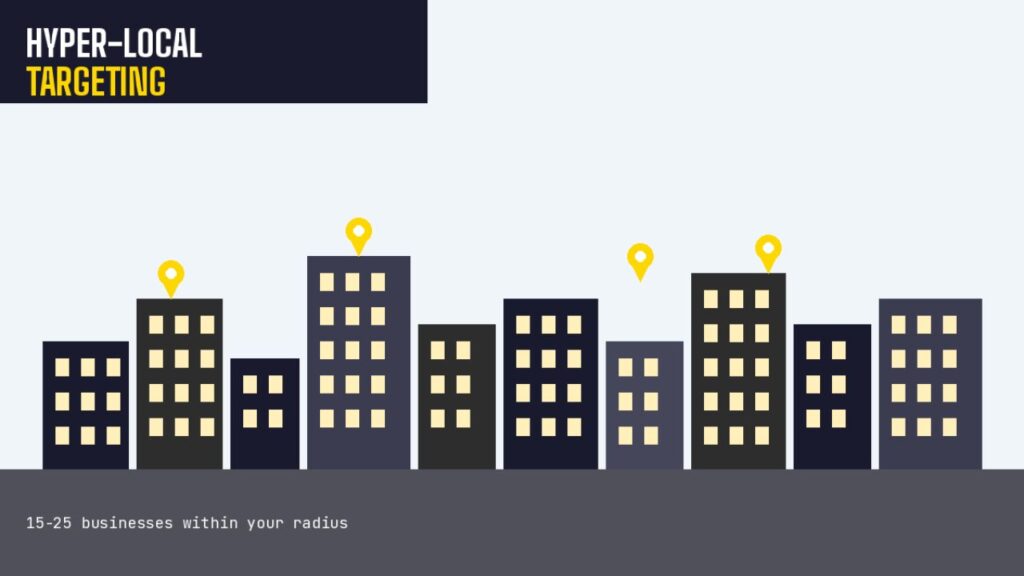
What you do: Build a micro-list of 15–25 businesses within a specific geographic radius that share a common profile.
Why it works: Geographic relevance is instant credibility for local services. “I work with 4 businesses on Main Street” means more than any case study.
Email angle: “I help [type of business] in [Neighborhood/City] with [specific problem]. Noticed you’re in the area — curious if this is on your radar.”
CTA: “Worth a 5-minute call to see if it fits?”
2) The “Review Insight” play
What you do: Read their Google/Yelp reviews. Find a recurring complaint or praise point. Reference it.
Why it works: It shows you actually looked. And public reviews are fair game.
Email angle: “I noticed a few of your reviews mention [specific thing]. That’s usually a sign of [problem you solve]. We helped [similar business] turn that around.”
CTA: “Can I share what worked for them?”
3) The “New Hire Signal” play
What you do: Monitor job postings. When they’re hiring for a role related to your service, reach out.
Why it works: Hiring signals priorities. If they’re looking for a marketing person, marketing is a pain point. If they’re hiring ops, systems are a pain point.
Email angle: “Saw you’re hiring for [role]. Usually that means [related problem] is becoming a priority. That’s what we specialize in.”
CTA: “Worth comparing notes before you onboard someone?”
4) The “Permission Loom” play
What you do: Don’t send a video in email #1. Ask permission to send one.
Why it works: It’s intriguing without being pushy. And if they say yes, they’re actually going to watch it.
Email angle: “I put together a 60-second walkthrough of what I’d do differently with your [website/process/setup]. Can I send it?”
CTA: “Yes or no works.”
5) The “3-Email Promise” play
What you do: Tell them upfront you’ll only send 3 emails max. Then actually stop.
Why it works: It signals respect. It’s rare. And it differentiates you immediately from everyone else hammering their inbox.
Email angle: “I’ll only send 3 emails — if it’s not relevant, I’ll disappear.”
CTA: “Is [problem] even on your radar right now?”
What 2026 cold email trends will reward
Here’s my prediction for what separates winners from everyone else:
Best cold email response rates will come from:
- Short subject lines (under 50 characters)
- Credibility in the first line
- One clear hypothesis
- Low-friction, permission-based CTAs
- 2–3 email sequences, max
What most senders will keep doing:
- Blasting templates at scale
- Letting AI “personalize” everything
- Scaling volume until deliverability collapses
- Ignoring the signals that their approach isn’t working
Fastest way to get ignored:
- Vague value props
- Link-heavy first emails
- Fake familiarity
- “Checking in” follow-ups with no new value
The inbox is getting noisier. Attention is harder to earn. But for local and service businesses willing to slow down, do real research, and treat prospects like humans — the opportunity has never been bigger.
Cold email isn’t dead.
It’s just waiting for people who actually care to use it right.
That’s the goldmine playbook. And it’s the only cold email strategy that scales without burning your reputation.
Frequently Asked Questions
1. Does cold email still work in 2026? Yes. Cold email delivers one of the highest ROIs of any marketing channel ($36–$42 for every $1 spent). The key is relevance, personalization, and respecting your prospect’s time — not volume.
2. What is a good cold email response rate? The average is 1–5%, but top performers consistently hit 10–25% by using smaller lists, better research, and permission-based approaches.
3. How many cold emails should I send per day? Quality beats quantity. For small businesses, 20–50 highly targeted emails will outperform 500 generic blasts every time. Focus on building relationships, not hitting quotas.
4. How long should a cold email be? Under 125 words performs best. Keep it short, specific, and focused on one clear ask.
5. Is cold email legal? Yes, when done correctly. Follow CAN-SPAM guidelines: include your business address, honor unsubscribe requests, and don’t use deceptive subject lines.
About Massive Impact
Massive Impact is a performance marketing agency specializing in local and service-based businesses. We help small to mid-sized companies build full-funnel brand strategies that actually convert — from first touch to loyal customer.
Want to talk about your cold email strategy and outreach? Get in touch.